


Article by
Jonathan Dier
Jonathan Dier is the owner of A Aable Locksmith, a family owned and operated Locksmith company serving the Naples Florida area since 1979. He has over 35 years experience in the Locksmith and Security industry. A Aable Locksmith specializes in residential and commercial security, focusing on customer satisfaction.
The strongest storm shutters in Collier County can't protect your property if the latch holding your entryway closed shears off in triple-digit gusts. True hurricane home security starts right at the perimeter, where brute wind pressure and physical hardware collide. If you've ever evacuated Southwest Florida ahead of a major storm, you know the unsettling worry that follows. You wonder whether your patio sliders will hold against punishing coastal wind, or if a regional power blackout will leave digital hubs dead and your home vulnerable while you're miles away.
You deserve confidence that your entryways will stay locked tight, even when the electric grid and Wi-Fi fail completely. In this guide, you'll discover how to secure your Naples home doors and entry points against hurricane-force winds and post-storm security threats using reliable physical defenses. We'll walk you through a practical storm checklist covering reinforced deadbolts, sliding glass door security, and coastal-grade hardware engineered to protect your home from the initial gusts through the aftermath.
Key Takeaways
- Discover why true hurricane home security depends on heavy-duty mechanical hardware that holds fast when regional power grids and Wi-Fi networks go dark.
- Learn how reinforcing door frames, strike plates, and deadbolts prevents catastrophic wind breaches during severe Southwest Florida pressure surges.
- Find out how to fortify patio sliding glass doors against wind loads and forced entry by replacing fragile factory latches with secondary physical locks.
- Get a step-by-step pre-evacuation checklist to inspect perimeter entryways, eliminate stray duplicate keys, and verify hardware alignment before leaving town.
- Understand the vital role professional installation plays in preventing jamb splitting, binding latches, and hardware failure under intense storm conditions.
What Is Hurricane Home Security in Coastal Southwest Florida?
Many homeowners assume a monitored keypad and a few wireless cameras make their property safe. Along the Gulf Coast, that assumption falls apart quickly. True hurricane home security requires integrating heavy structural wind resistance with unyielding mechanical intrusion prevention. A storm does not simply test your roof shingles; it exerts brutal force on every exterior threshold while creating prime conditions for opportunistic property crimes.
During an active tropical system, Southwest Florida properties endure violent barometric pressure shifts while entire neighborhoods sit completely evacuated. Real security demands hardware that holds firm against both physical atmospheric pressure and unauthorized entry. For a deeper look at structural retrofitting and comprehensive storm preparation, understanding how building envelopes withstand major cyclonic weather is critical.
To better understand how physical structural reinforcement protects homes during severe weather events, watch this helpful overview:
The Dual Threat: Extreme Weather and Property Vulnerability
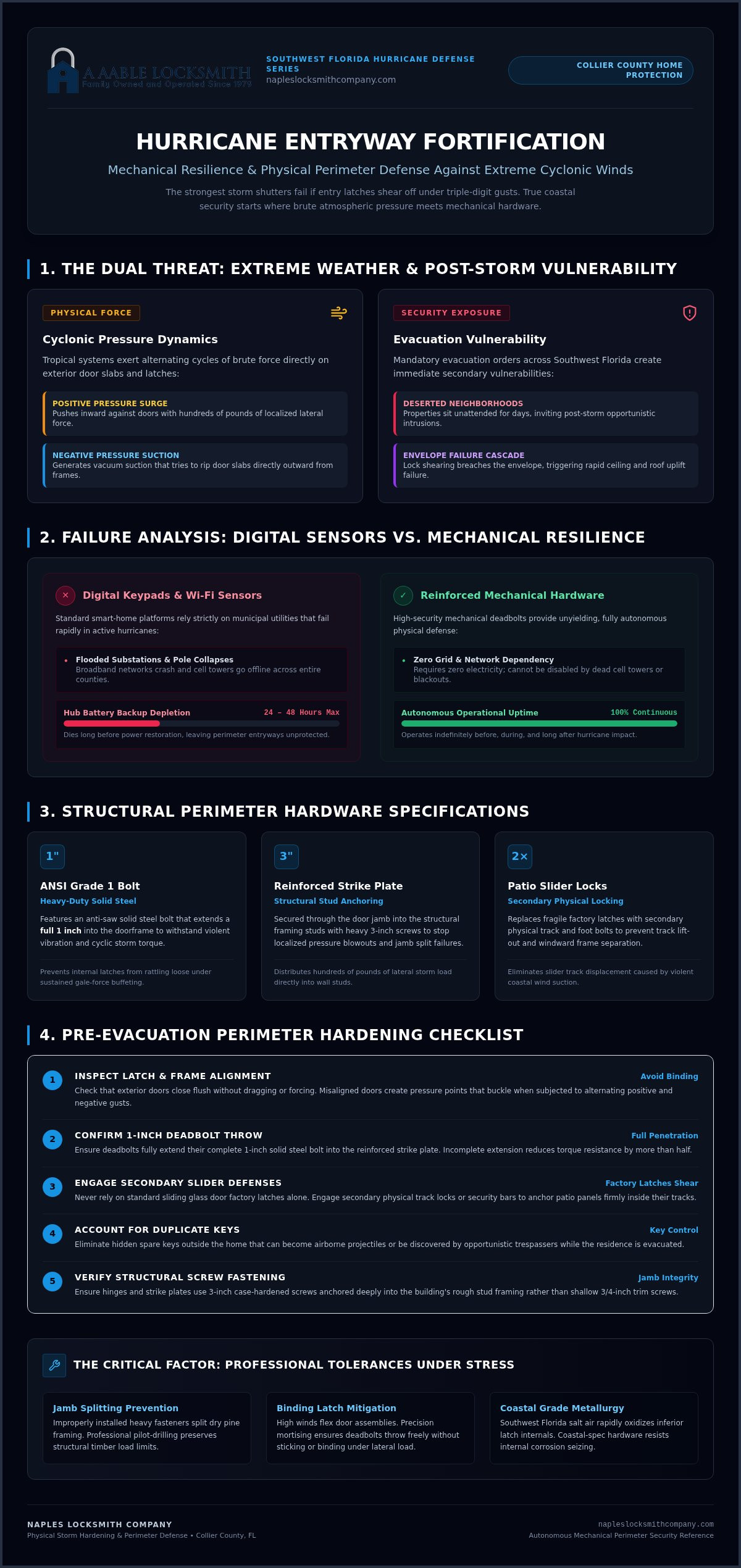
Tropical weather systems generate alternating cycles of intense positive and negative pressure. Positive pressure pushes inward against doors, while negative pressure creates a suction effect that tries to rip them outward from their frames. If an exterior lock gives way, wind breaches the interior envelope, dramatically increasing the risk of catastrophic roof failure. At the same time, mandatory evacuations across Collier County leave entire residential communities deserted for days, exposing unsecured doors to post-storm vandalism.
Why Electronic Alarms Fail When Hurricanes Strike
Smart home platforms and Wi-Fi security sensors dominate the modern market, but they harbor a critical flaw: they rely on municipal utilities. When severe weather knocks out utility poles and floodwaters swamp substation equipment, broadband connectivity disappears and the electrical grid crashes. Battery backups on cameras and wireless hubs typically deplete within twenty-four to forty-eight hours.
That is why mechanical resilience matters. Installing dedicated high-security locks provides continuous, autonomous protection. Hardened mechanical hardware requires zero electricity, cannot be knocked offline by cell tower failures, and keeps your exterior thresholds locked tight throughout the storm and its aftermath.
Reinforcing Structural Entry Points: Exterior Doors, Frames, and Deadbolts
Your exterior door does more than welcome guests; it acts as an indispensable structural barrier. When hurricane-force winds buffet a house, the door slab transfers hundreds of pounds of localized lateral pressure into the latch and surrounding frame. If that mechanical connection fails, external pressure surges inside, often leading to rapid ceiling failure and catastrophic roof uplift. Upgrading your entry hardware provides the mechanical strength needed to keep the building envelope intact.
Aligning your entryway hardware with broader disaster guidance, such as Florida's official emergency plan, ensures your physical perimeter is thoroughly prepared before severe weather approaches.
The Role of ANSI Grade 1 Deadbolts in Storm Resistance
Standard residential locks simply aren't engineered for severe coastal storms. ANSI Grade 1 deadbolts feature solid steel, anti-saw bolts that extend a full inch into the doorframe, delivering maximum resistance against violent vibration and external torque. High-security commercial designs prevent internal latches from rattling loose under cyclic buffeting while keeping opportunistic burglars out while your neighborhood is evacuated. For trusted hardware options that handle these exact conditions, explore our Schlage high security locks guide to see how precision engineering protects coastal entries.
Strengthening Strike Plates and Wood Door Jambs
A heavy-duty deadbolt is only as reliable as the wood frame receiving it. Most builder-grade installations secure strike plates with tiny three-quarter-inch screws that bite only into soft cosmetic trim. In high winds, that thin wood quickly splinters under sustained loads.
- Deep Stud Anchoring: Replace shallow hardware with three-inch hardened steel screws that bite directly into the home's structural framing studs.
- Reinforced Strike Boxes: Install heavy-gauge steel reinforcement boxes that enclose the bolt cavity, preventing the frame from splitting under sustained door rattling.
- Hinge Screw Upgrades: Secure the hinge side of the door with matching long screws so both edges of the slab carry equal wind load.
Digital Keypad Locks with Standalone Battery Power
Keyless access provides exceptional convenience, especially when returning home after stressful regional evacuations. Unlike app-reliant smart locks that fail when power grids and cell towers go dark, a standalone digital keypad lock operates entirely on local battery power. This gives you secure, key-free access without worrying about lost physical keys or dead neighborhood broadband lines.
If you aren't sure whether your current doorframes can withstand coastal gusts, consider having an experienced team at A Aable Locksmith inspect your entry hardware for dependable hurricane home security.
Securing Sliding Glass Doors: Fortifying Southwest Florida Patio Openings
Sliding glass doors bring beautiful lanai views into your home, but they also present one of the most vulnerable structural openings along our coast. During severe storms, high-velocity gusts generate substantial positive and negative wind loads across broad spans of glass. Acoustic break sensors might detect an impact, but they do nothing to physically hold the panel inside its frame when gale-force winds hit. True hurricane home security requires mechanical reinforcement designed to keep these massive glass expanses firmly anchored.
Following guidelines from the National Weather Service for securing your home for a hurricane emphasizes reinforcing all large openings, including vulnerable patio portals that can compromise the home envelope if breached.
Factory Latches vs. Dedicated Sliding Door Security Locks
Most builder-installed patio sliders come equipped with simple hook latches made of cast zinc or pot metal. These small latches are notorious for snapping under moderate pry pressure or popping out of their keepers when heavy winds shake the frame. Dedicated secondary locking hardware changes the equation entirely:
- Dual-Point Auxiliary Locks: These mount directly to the active door stile and anchor heavy steel bolts into the upper and lower framing tracks.
- Track-Pinning Systems: Hardened metal pins prevent intruders from lifting the sliding panel completely out of its floor channel.
- Foot-Operated Deadbolts: Secondary step bolts pin the base of the door into the floor sill, immobilizing the panel against violent crosswinds.
Addressing Track Flex and Wind Deflection in Naples Lanais
In wide three- and four-panel lanai systems, wind pressure causes large panes of impact glass to bow and flex. This lateral movement can pull a basic factory latch right out of its shallow strike, allowing wind-driven rain to enter and opening the door to forced entry. Scheduling professional sliding door lock services ensures your patio doors receive specialized secondary locks that clamp panels securely, stabilizing the frame through severe barometric turbulence.
Salt-Air Corrosion on Coastal Locking Mechanisms
Living near the water means dealing with persistent salt fog. Along coastal Naples and Marco Island, salt spray settles into exterior slider tracks, rapidly corroding delicate internal springs and cast hardware. A latch that appears functional during normal summer days can easily bind or shear under sudden hurricane wind pressure. Inspecting and lubricating these mechanisms before storm season guarantees your secondary locks engage smoothly when evacuation orders are issued.
Pre-Evacuation Checklist: Hardening Your Home Before the Storm Hits
Packing suitcases and mapping fuel stops take priority when a storm bears down on Collier County. Even so, rushing out the door without completing a systematic perimeter check leaves your residence exposed. Tapping an arming button on a mobile phone app doesn't confirm whether a deadbolt latch actually seated into its strike plate. A methodical physical walkthrough forms the backbone of real hurricane home security, giving you total peace of mind once you cross county lines.
Step 1: Inspect and Test Every Exterior Mechanical Latch
Walk the entire ground level and inspect every perimeter opening. Make sure your deadbolts throw their complete one-inch length into the frame without resistance. Over time, Florida humidity causes wooden doors to sag slightly, leading homeowners to pull or lift the handle just to get the latch to click. If a bolt only partially enters the strike opening, strong wind gusts will readily pop it free.
- Clear Bolt Cavities: Clean debris or paint buildup out of frame strike holes so bolts extend fully.
- Lubricate Moving Parts: Spray lock cylinders with a dry silicone lubricant to displace moisture and prevent internal pins from seizing.
- Secure Secondary Gates: Lock side yards and perimeter gates to keep windblown outdoor items from turning into airborne battering rams.
Step 2: Rekey and Audit Physical Key Access
Neighborhoods sit vacant for days during mandatory evacuations. Having unaccounted copies of your house keys circulating with former service contractors, landscapers, or past tenants poses a serious post-storm vulnerability. Scheduling timely lock rekeying ahead of storm season resets physical control over your perimeter, guaranteeing only your household holds working access.
Step 3: Secure the Garage Entry Threshold
Large overhead garage doors frequently give way first under violent wind shear. Once high pressure buckles an overhead door, external wind and rain rush into the garage space, exerting direct force on the interior entry door leading into your main living quarters. Treat this interior transition exactly like an exterior front entrance. Verify that it features a solid-core build, a heavy-duty deadbolt, and a reinforced strike plate anchored into wall studs.
For smart keypad owners, remember to program a temporary, standalone master code for trusted restoration specialists or neighbors before packing your vehicle, avoiding remote app dependencies during network blackouts.
Schedule your pre-storm lock rekeying service today.
Why Naples Homeowners Trust Professional Locksmiths for Storm Hardening
Reinforcing your entryways against extreme weather isn't simply a matter of buying heavy-duty hardware off the shelf. Without precise alignment and proper mortising, even an ANSI Grade 1 deadbolt can bind, stick, or fail to seat cleanly into the frame. True hurricane home security demands experienced hands that understand the structural nuances of coastal Florida architecture, where high humidity and shifting framing constantly challenge close tolerances.
The Value of 45+ Years of Local Southwest Florida Experience
Coastal Collier County presents environmental challenges that nationwide call centers simply don't understand. A Aable Locksmith has operated as a third-generation, family-owned business in Naples and Bonita Springs since 1979. Over 45 years of hands-on experience means our technicians know precisely how salt-air corrosion, settling foundations, and strict regional building standards impact door integrity. Partnering with a dedicated local locksmith guarantees hardware choices proven to withstand our unique coastal climate.
Comprehensive Hardware Surveys and Precision Installation
A seasoned locksmith examines your entire perimeter to locate hidden vulnerabilities before storm season arrives. During an on-site survey, an expert evaluates frame squareness, checks whether strike depth reaches structural wall studs, and identifies weak factory latches. Proper mortising prevents jamb splitting under extreme lateral loads while maintaining the smooth, effortless turning operation you expect daily. If you have custom entryway doors, our guide on high-end front door locks in Naples explains how to pair top-tier mechanical strength with high-end designer finishes.
Securing Your Property Today
Waiting until a tropical disturbance enters the Gulf leaves you scrambling alongside thousands of other coastal residents. Proactive reinforcement protects your property year-round against forced entry and severe weather alike, removing the frantic rush when storm warnings are issued. Taking early action with A Aable Locksmith gives you reliable, mechanical perimeter protection and absolute peace of mind whenever severe weather threatens our coast.
Build Uncompromising Storm Resilience for Your Naples Home
Protecting your property against severe coastal weather requires more than boarding windows and hoping the electrical grid stays online. Reliable hurricane home security depends on the physical hardware holding your doors shut when atmospheric pressure spikes and violent crosswinds test your perimeter. By reinforcing entry frames with commercial-grade deadbolts, anchoring vulnerable patio sliders against track flex, and eliminating stray keys before you evacuate, you establish a resilient defense that works completely offline.
For more than 45 years, A Aable Locksmith has served as Southwest Florida's trusted security partner. As a third-generation, family-owned local business founded in 1979, our team brings unmatched expertise in high-security deadbolts, patio slider fortification, and salt-air corrosion defense. Take the guesswork out of severe weather prep and enjoy real peace of mind whenever storm clouds gather.
Your home is your most valuable sanctuary, and preparing its perimeter today ensures it stands secure for years to come.
Frequently Asked Questions
Can strong hurricane winds blow an exterior entry door open?
Yes, hurricane gusts exert alternating positive and negative pressure cycles against the slab that easily overpower weak latches. If your door relies on standard builder-grade strike plates held by tiny three-quarter-inch screws, the soft wood jamb can split instantly. Once the latch fails, wind blows the door inward or rips it outward. Upgrading to three-inch framing screws and reinforced deadbolts prevents this structural envelope breach.
Do sliding glass door security bars hold up against hurricane winds?
Basic tension-mounted security bars often dislodge when strong winds cause broad lanai glass panels to flex. As heavy gusts bow the glass inward, tracks shift and lightweight bars can pop out of position. Bolted secondary mechanisms, such as top-track pins and foot-operated deadbolts, provide far superior hurricane home security. These physical locks stay anchored directly into structural framing channels despite intense vibration and pressure swings.
Will a smart keypad lock work during a prolonged hurricane blackout?
Standalone battery-powered digital keypads continue operating normally throughout extended electrical grid blackouts. Because they rely on internal AA or lithium batteries rather than household current, you can unlock your door without utility power. While Wi-Fi features stop communicating once regional broadband nodes go dark, the local keypad code will still grant entry. Choosing models with physical key overrides guarantees dependable access after returning from an evacuation.
Why is an ANSI Grade 1 deadbolt recommended for Florida homes?
ANSI Grade 1 deadbolts represent the highest residential rating for structural impact and brute force resistance. Built with solid steel anti-saw pins and a full one-inch bolt throw, they resist immense torque and door vibration. In coastal communities like Naples and Marco Island, this heavy mechanical construction keeps doors tightly seated in their frames during violent storm buffeting while deterring opportunistic burglary when neighborhoods sit evacuated.
Should I rekey my locks before leaving for a hurricane evacuation?
Rekeying your locks before an evacuation is a smart precaution if keys were previously loaned to past contractors, cleaning crews, or previous residents. Vacant properties across Southwest Florida present tempting targets during mandatory storm departures. Rekeying resets your perimeter security quickly without the cost of installing entirely new locksets. It guarantees that only your immediate family holds working keys while your home remains unattended.
How does salt air impact exterior home security locks in Naples?
Airborne salt mist along coastal Naples and Bonita Springs accelerates corrosion inside brass pin tumblers and internal latch springs. Over time, salt deposits cause lock cylinders to bind, seize, or stick. Under the sudden strain of hurricane wind loads, a corroded latch can shear unexpectedly. Regular maintenance using dry silicone lubricant and choosing corrosion-resistant hardware preserves smooth operation and maintains dependable hurricane home security.
What is the most vulnerable entry point on a Florida home during a storm?
Sliding patio glass doors and double French doors represent the most vulnerable access points on coastal residences. Sliders span wide openings that bow inward under heavy wind loads, placing extreme lateral shear on frail factory hook latches. Double doors often lack a center structural post, relying solely on surface flush bolts that can pull free. Installing dedicated auxiliary locks anchors these vulnerable openings securely.


