


Article by
Jonathan Dier
Jonathan Dier is the owner of A Aable Locksmith, a family owned and operated Locksmith company serving the Naples Florida area since 1979. He has over 35 years experience in the Locksmith and Security industry. A Aable Locksmith specializes in residential and commercial security, focusing on customer satisfaction.
To understand how to secure a rental property between tenants in Naples, begin with a careful walkthrough, address maintenance issues, and reset access before the next move-in. Between tenants, review who can enter and consider rekeying locks or changing keypad codes to limit access from former occupants. Document the home’s condition to establish a clear baseline for the next tenancy.
A changeover involves more than a quick clean. A sticking deadbolt, worn sliding-door lock, or overdue repair can affect both security and readiness. This guide covers how to inspect the rental, manage keys and access codes, and prepare the property for its next occupants. Follow a practical turnover sequence, document the condition, and consider professional lock service when access hardware needs attention.
Key Takeaways
- Before a new tenant moves in, review who has keys or codes and reset access to reduce the chance of former occupants retaining entry.
- Walk through the rental systematically, noting maintenance needs and documenting the property’s condition with dated photos.
- Check doors, deadbolts, and sliding glass door locks for wear or damage as part of the turnover.
- Clean and repair the unit between tenancies to establish a clear record of its condition for the next move-in.
- Plan ongoing visual checks to catch issues such as leaks, mold, or HVAC concerns before they grow.
2. Changing locks or codes and rekeying
A practical part of how to secure a rental property between tenants in Naples is reviewing every key and access code. Reviewing locks and keys between tenants is a practical part of managing rental access. A former tenant may return the keys they received, but copies could still exist. Changing access between tenancies helps reduce the chance that an old key or code will still work after move-out.
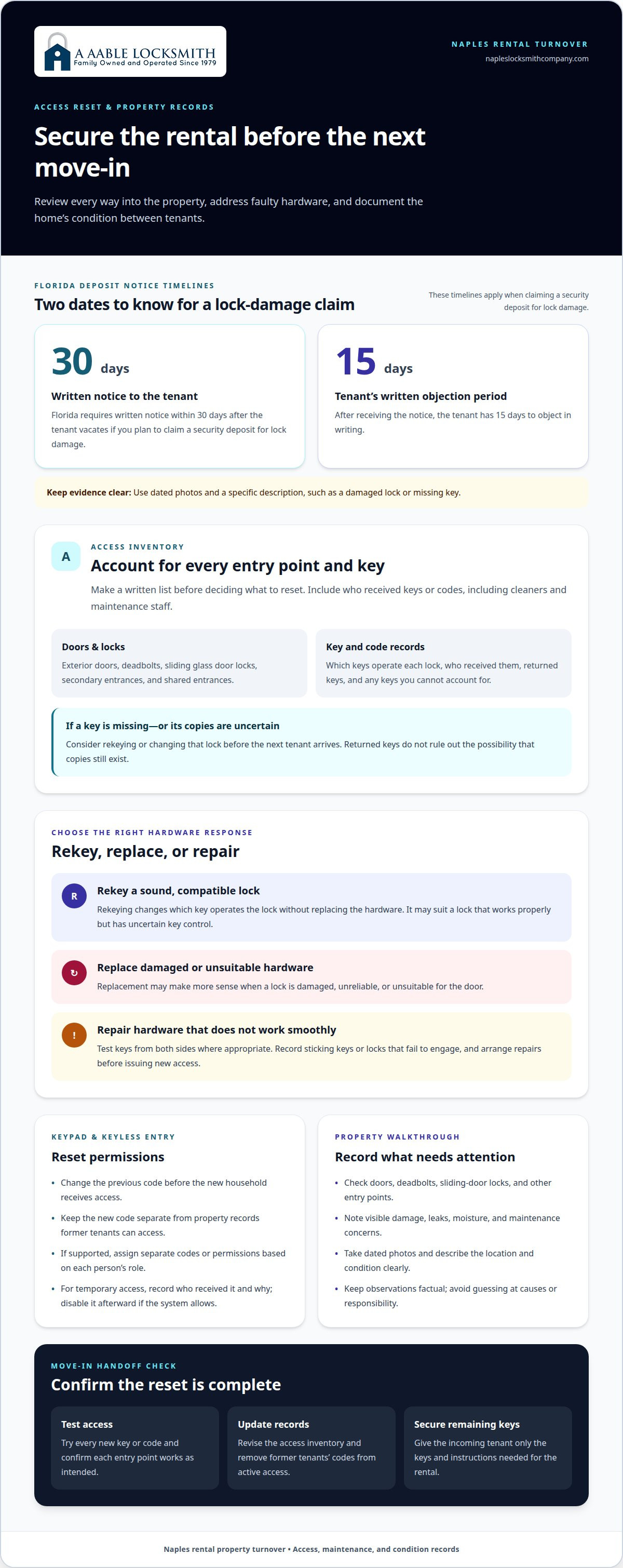
Start with a written access inventory. List each exterior door, deadbolt, sliding glass door, keypad, and shared entrance. Note which keys operate each lock and who received them, including cleaners and maintenance staff. Compare the inventory with the keys returned. If a key is missing or you can’t account for its copies, consider rekeying or changing that lock before the next tenant arrives.
Rekeying changes which key operates a compatible lock without replacing the hardware. Replacing a lock may make more sense if it is damaged, unreliable, or unsuitable for the door. For example, a sticking key may signal a lock that needs repair, while a sound lock with uncertain key control may be a candidate for rekeying. Let the door’s condition and the lock’s function guide your decision.
Check every entry point, not just the front door. Test the key from both sides where appropriate, and make sure the lock engages smoothly. Inspect the sliding glass door lock and any secondary entrance tenants use. A missing key for a storage area or shared entry also matters. Record faulty hardware and arrange repairs before issuing new keys or codes.
For keypad entry, change the previous code before giving access to a new household. Keep the new code separate from property records former tenants can access. If the system supports separate user codes, assign access according to each person’s role. Some keyless systems let you set permissions for tenants and staff in shared areas, helping limit access to the spaces each person needs.
Keyless entry commonly uses keypad codes or proximity cards. Owners can update codes or provide new cards for incoming tenants. Some systems record access to a particular area, which may help clarify when an authorized code or card was used. Choose a setup that suits the property’s doors and shared spaces. Don’t assume every system offers the same controls or recordkeeping features.
Some systems also allow temporary access codes that remain active for several hours on a specified day. This can suit a scheduled repair visit or planned turnover task. Set the time window for the intended visit, then disable access afterward if the system allows it. Record who received temporary access and why, especially when several workers enter during a vacancy.
Keep lock records distinct from deposit decisions. If you plan to claim a security deposit for lock damage, Florida requires written notice within 30 days after the tenant vacates. A tenant has 15 days after receiving that notice to object in writing. Document the condition with dated photos and a clear description, such as a damaged lock or missing key. Good records can help explain a later dispute.
To finish securing a rental property between tenants in Naples, test every new key or code and update the access inventory. Give the incoming tenant only the keys and instructions needed for the rental. Secure remaining keys, remove former tenants’ codes from active access, and confirm that each entry point works as intended. This final check helps prevent confusion during move-in or a later repair visit.
4. Rental unit
A clear plan for how to secure a rental property between tenants in Naples starts with a room-by-room walkthrough. Florida landlords must provide a home that is safe, meets housing code requirements, and receives reasonable repairs when necessary. Check each room for visible damage, working fixtures, and signs of leaks. Written inspection notes turn observations into specific tasks before move-in, instead of leaving repairs to memory or rushed impressions.
Begin where water can cause hidden damage. Look beneath sinks, around toilets, beside the water heater, and near the washing machine. Check for damp surfaces, stains, peeling paint, or musty odors. A stain under a kitchen sink, for example, could indicate a leak that needs attention. Note the exact location and whether the area feels damp. A professional plumber can inspect fixtures and help identify potential plumbing problems proactively.
Test plumbing fixtures individually. Run faucets and showers, flush toilets, and observe how sinks and tubs drain. Record a dripping tap, slow drain, or toilet that continues running. These signs can point to different maintenance needs, so describe what you observe rather than guessing at the cause. If a problem persists after a basic check, arrange an appropriate repair before the next tenant uses the fixture.
Review the heating and cooling equipment and nearby areas. Use the normal controls to turn the system on, then note unusual sounds, weak airflow, or water nearby. Look at accessible filters and vents for visible dust or blockage. Don’t open equipment panels or attempt work beyond your skills. A concise maintenance note can help a technician locate the concern, understand when it occurs, and determine what needs attention.
Look for signs of moisture in less obvious places. Check bathroom corners, window frames, closets against exterior walls, and areas beneath air-conditioning equipment. Staining, bubbling paint, or damaged trim deserves attention before cosmetic repairs conceal it. Photograph the affected surface and note nearby conditions, such as a window that doesn’t close properly. Finding the source matters: repainting without addressing a leak may leave the underlying problem unresolved.
Inspect doors, windows, floors, cabinets, and appliances for damage that affects safe or ordinary use. Note a loose handrail, cracked tile, broken cabinet hinge, or window that won’t close. Test smoke alarms using their normal test controls, and record any that need follow-up. Keep notes factual. Describe where an issue appears and what happens instead of guessing who caused it or which repair will solve it.
Use dated photos to document visible damage and keep them with the turnover record. Photograph the whole room, then take a closer image of the specific issue. For example, capture a cracked tile beside the bathroom doorway and a close-up of the crack. Cleaning and completing repairs between tenancies helps establish the home’s condition for the next move-in and distinguish previously documented damage from later observations.
Cleaning also makes the final walkthrough more useful. Check inside the refrigerator, oven, cabinets, and bathroom drawers for leftover items or residue. Then plan recurring visual inspections. A quarterly review can help identify concerns such as mold, leaks, or HVAC problems. Record the date, areas reviewed, and maintenance follow-up. This repeatable approach to securing a rental property between tenants in Naples gives each inspection a clear purpose and helps you spot changes over time.
Complete the turnover record by noting the condition of each damaged item and, when possible, taking dated photos. Florida landlords are advised to document damaged items in a rental unit with dated photos when possible, provide a copy to the landlord, and keep one for their records. Keep observations and images together with the written inspection notes so they can be reviewed later. Florida tenants are advised to leave a rental unit clean when moving out, so record the unit’s condition as received and note any cleaning that remains. Cleaning and repairing a rental between tenants can help distinguish damage caused by a former tenant from damage caused by a future tenant.
Make the walkthrough part of ongoing maintenance, not a task reserved for turnover. The page recommends quarterly visual inspections of Florida rental properties to identify issues such as mold, leaks, and HVAC problems. Note visible changes and follow up on concerns that may need further evaluation or repair. Consistent records help clarify which issues were already present and which appeared later, while giving maintenance work a clear starting point. Addressing concerns before a new tenancy begins can also help ensure the property is ready for ordinary use.
Your property
Build the turnover plan around the property, not just its interior rooms. In Naples, waterfront rentals need regular maintenance to prepare for unpredictable weather. Walk around the exterior and note loose screens, damaged trim, standing water, and visible roof concerns. Photograph each issue from a useful distance, then take a closer image of the affected area. A written record helps you track what needs attention before the next tenant arrives.
Start outside and follow the same route each time. Check the entry, windows, exterior doors, walkways, and accessible drainage areas. Look for debris that could block water flow, damaged seals, or a gate that no longer closes properly. For example, a door that catches after humid weather may need adjustment before it becomes difficult to secure. Record the location and condition instead of relying on memory.
Naples weather can change quickly, so make preparation part of routine property care. Check exposed areas for signs of water intrusion, including stains near windows and damp spots around exterior walls. Clear visible debris from accessible drains and note where water appears to collect. Don’t treat a stain as merely cosmetic until you understand its source. Addressing the cause can prevent repeat damage and another repair during the next tenancy.
Check outdoor fixtures and shared spaces as carefully as the rental interior. Test exterior lights using their normal switches, and note bulbs or fixtures that need attention. Look at handrails, steps, fences, and paths for visible damage or trip hazards. If the property has a pool area or shared amenity, include its boundaries and access points in the walkthrough. Make a written list so every maintenance task has a clear location.
Naples-area homeowners associations can add complexity to rental-property management. Associations may change rules and strictly enforce their procedures. Before scheduling exterior work, review the property’s current association instructions, including requirements for contractors, access, and appearance. Keep relevant notices with the turnover records. A planned repair could be delayed if it conflicts with an approval process or property rule, so include association coordination in the maintenance schedule.
Use a simple work log to connect observations with completed repairs. Record the date, issue, action taken, and any follow-up still needed. For instance, note that a contractor addressed a window leak, then check the same area after the next rain. Keep receipts, work orders, and before-and-after photos together. This record can help distinguish a recurring property issue from a new concern reported by an incoming tenant.
Prioritize repairs by their effect on safety, weather protection, and everyday use. A loose exterior handrail or door that fails to close deserves prompt attention. Cosmetic paint wear can be tracked separately if it doesn’t expose the surface or interfere with use. When several tasks compete for attention, group work by location. Completing related exterior repairs during one visit can reduce repeat access arrangements and keep the maintenance record organized.
Before move-in, make one final pass around the property. Confirm that completed work is visible, paths are clear, and entry points operate properly. Compare the final condition with your dated photos and task list. If the property is waterfront, give exposed areas particular attention after severe weather has passed. A documented walkthrough gives the next tenancy a clear starting point and helps you plan ongoing property care.
Repair any remaining issues and add the work to the log. Keep notes factual and specific: describe what you observed, where it was, and whether the repair appears complete. If a concern remains unresolved, carry it forward rather than marking the task finished. This makes the next walkthrough easier to compare and helps you track recurring trouble spots. Store photos, notes, and repair records together so they can be reviewed before work is arranged or a tenant arrives. A Naples-area property manager said homeowners associations can complicate rental-property management because they may change rules and strictly enforce their procedures.
Treat the log as a practical handoff, not a substitute for inspecting the property again. After work is completed, revisit the affected area and record any visible change or remaining concern. Keep association instructions with related maintenance notes, and confirm that planned work still meets the property’s current requirements before scheduling it. When several items need attention, make their locations and next steps clear so nothing is lost between turnovers. A consistent record supports an orderly exterior review and gives each follow-up task a clear place in the maintenance routine.
A Aable Locksmith: Digital Keypad Lock Installation
A Aable Locksmith can prepare a Naples rental’s entry hardware for its next occupants. Digital keypad lock installation offers code-based access, while lock rekeying changes which keys operate compatible locks. If an entry lock is worn or a sliding door needs better security, new hardware installation or sliding glass door lock security can address that specific concern.
Consider professional lock service when keys are unaccounted for, existing hardware needs attention, or you want keypad access in place before move-in. Matching the work to the door and the turnover plan helps keep the process practical. For details about keypad installation, visit A Aable Locksmith’s digital keypad lock page.
Make Each Turnover Easier to Manage
The next step in learning how to secure a rental property between tenants in Naples is to make the changeover a repeatable routine. Use one turnover record for each property, then update it as you learn which maintenance tasks recur and which access arrangements need clearer handoffs. A consistent process can make future transitions easier to organize, especially when several people help care for the rental.
After each move-in, note any questions or issues that reveal a gap in your process. If new tenants have trouble understanding entry instructions, revise the handoff. If the same exterior concern returns, add it to your maintenance plan. Small adjustments help your routine reflect the property’s actual needs instead of relying on memory.
For help with rekeying as you prepare for a new tenancy, contact A Aable Locksmith.
A thoughtful turnover routine gives you a steadier starting point for every new tenancy. Take the next step with confidence.
Frequently Asked Questions
How do you secure doors, windows, and sliding glass doors at a vacant rental property?
Check every opening individually, including secondary doors, ground-level windows, and sliding glass doors. Close and lock each one, then test the handle or latch to confirm it holds. Make sure window locks engage and frames sit properly in their tracks. For a sliding door, check that it cannot move while locked. If hardware is loose, damaged, or difficult to operate, arrange a repair before leaving the property vacant.
What are the best ways to deter break-ins at an empty rental home?
Make the home look cared for and avoid obvious signs that it’s unoccupied. Arrange for mail and packages to be collected, keep the entry and walkways clear, and remove ladders or tools that could make access easier. Close blinds or curtains so passersby can’t easily see inside. If a trusted person already visits for maintenance, coordinate property checks with them and ask them to report visible damage or entry concerns.
What Florida and Collier County rules apply to vacant rental properties between tenants?
Florida landlords must make reasonable provisions for locks and keys and provide a safe home that meets housing code requirements, with reasonable repairs when necessary. If claiming a security deposit for damage, the landlord must give written notice within 30 days after the tenant vacates; the tenant has 15 days after receiving notice to object in writing.


