


Article by
Jonathan Dier
Jonathan Dier is the owner of A Aable Locksmith, a family owned and operated Locksmith company serving the Naples Florida area since 1979. He has over 35 years experience in the Locksmith and Security industry. A Aable Locksmith specializes in residential and commercial security, focusing on customer satisfaction.
What if the biggest move-in security gap isn’t a weak lock, but not knowing who still has a key? When you take possession of a home, you can’t be sure how many copies are out there or who received them. Rekeying locks for new home access is a practical way to make old keys stop working while keeping hardware that’s still in good condition. It’s a sensible first step before boxes are unpacked and daily routines begin.
Think of rekeying as an access audit, not just a quick change at the front door. This checklist explains which exterior locks to include, when to arrange the work around closing and moving day, and what else may need attention, such as garage or gate access. You’ll also learn when a lock may be rekeyed and when worn, damaged, or unsuitable hardware calls for repair or replacement. That way, you can make a clear plan without replacing locks unnecessarily.
Key Takeaways
- Rekeying locks for new home access can reset which keys work while letting you keep compatible hardware in good condition.
- Choose between rekeying and replacement based on each lock’s condition, compatibility, and whether you want to keep the existing hardware.
- Walk the property and list exterior doors and other compatible locks that use house keys before arranging the work.
- Make your inventory and arrange an assessment soon after ownership transfers. Test each changed lock before relying on the new keys.
- A locksmith serving Naples can assess your locks and help determine which ones may be rekeyed, repaired, or replaced.
Why rekeying locks for a new home belongs on your move-in checklist
Moving into a new home brings plenty to look forward to, from settling into a new neighborhood to arranging your furniture. But there’s one detail you may not be able to confirm: who still has a working key? A previous owner may hand over every key they know about, but that doesn’t prove every copy has been returned or destroyed. Making rekeying locks for new home access part of your move-in plan gives you a practical way to address that uncertainty.
Rekeying means a locksmith changes the combination inside a compatible lock cylinder so the existing keys no longer operate it. If the hardware is suitable, it can stay in place while a new key works with the reconfigured cylinder. For a technical overview of how lock rekeying works, see Wikipedia’s explanation of the process.
What rekeying changes and what stays the same
With rekeying, the key combination changes, but suitable existing hardware remains on the door. After a compatible lock is correctly rekeyed, the old key should no longer operate it. This can be a sensible alternative to replacing a lock you want to keep, provided its condition and design allow the work. Not every lock is compatible, so a locksmith can assess the hardware before recommending the next step.
Why a key handoff does not settle access
A key handoff accounts for the keys someone knows to return. It can’t tell you whether extra copies were made or where they went. A former resident, contractor, cleaner, or another person who previously had access may have had a copy. That doesn’t mean anyone will use one; it simply means a new homeowner may not have a complete record of every key.
A key handoff gives you control of the keys you know about, not certainty about every copy that may exist. Rekeying offers a straightforward reset for compatible locks, without assuming that missing keys will cause a problem. Homeowners in Naples can learn more about lock rekeying in Naples and ask a locksmith to assess whether their existing hardware is suitable. That check helps turn an unknown into a clear move-in decision.
Rekey or replace locks in a new home? Choose based on hardware condition
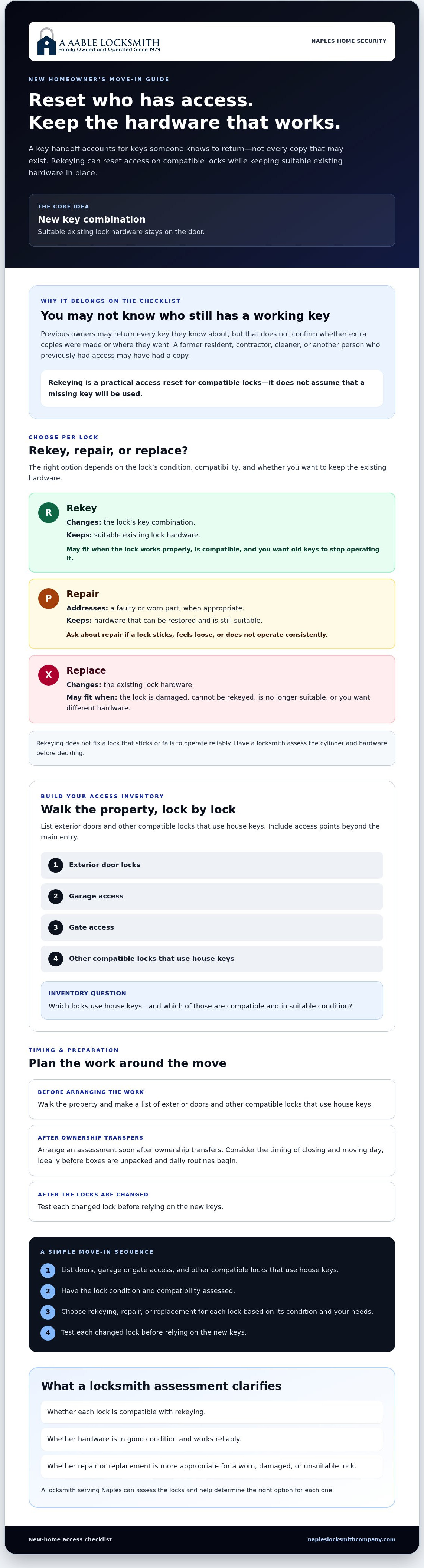
The right choice depends on more than wanting a new key. Consider whether each lock works reliably, whether its hardware is in good condition, and whether you want to keep it. Rekeying changes the key combination inside compatible existing hardware. Replacement removes the existing lock and installs new hardware. A locksmith can assess the cylinder and the lock’s condition before recommending which option fits.
| Option | What changes | What remains | When it may fit |
|---|---|---|---|
| Rekeying | The lock’s key combination | Suitable existing lock hardware | The lock works properly and you want existing keys to stop working |
| Repair | A faulty or worn part, as appropriate | Hardware that can be restored and is still suitable | The lock sticks, feels loose, or doesn’t operate consistently |
| Replacement | The existing lock hardware | Only the door and other components that remain suitable | The lock is damaged, can’t be rekeyed, or you want different hardware |
When rekeying may be the practical choice
If a lock opens and closes smoothly and you’re satisfied with the hardware, rekeying may address the key-control issue without replacing the lock. It’s a practical option for functional, compatible hardware after ownership changes. Compatibility isn’t guaranteed, though, so have a locksmith check the cylinder before proceeding. Rekeying also won’t fix a lock that sticks or fails to operate reliably. Mention any problems you’ve noticed during the assessment.
When to ask about repair or new hardware
Pay attention to locks that stick, feel loose, show visible damage, or work inconsistently. Those signs call for an assessment rather than simply changing the key combination. Depending on the problem, repair may be appropriate. Replacement may make more sense if the hardware can’t be rekeyed, is no longer suitable, or you’d prefer an upgrade. The choice should reflect the lock’s condition and your needs, not a blanket rule for every door.
If you’re planning rekeying locks for new home access, a lock-by-lock assessment helps avoid replacing sound hardware unnecessarily while identifying locks that need attention. Learn more about professional lock rekeying and ask a locksmith to review your list before you decide.
Which locks should new homeowners include in a rekeying plan?
A useful rekeying plan starts with a walk around the property, not just a look at the front door. List each exterior entry and note the type of lock, whether it works smoothly, and which key currently operates it. This inventory helps you discuss the right scope with a locksmith and spot secondary entrances that could otherwise be overlooked.
Make an entry-by-entry lock list
Begin at the front door, then check the back and side doors. Include a door from the garage into the home, if there is one, along with patio or other secondary entrances that have keyed locks. For each entry, note whether the lock sticks, appears damaged, or operates with a different key from the others.
- Door: Identify its location, such as front, side, or garage entry.
- Key: Note whether it shares a key with another lock or needs a separate one.
- Condition: Mark any stiffness, looseness, visible damage, or inconsistent operation.
These notes give the locksmith a clearer picture of the work you’re considering. They also help distinguish a key-control request from a lock that may need repair or further assessment.
Check access beyond the main household doors
Consider whether the property has a keyed gate, shed, or other outbuilding you want included in your access review. Add it to the list, but don’t assume it can use the same key or be rekeyed along with the house locks. Compatibility depends on the hardware. Record which keys serve these points so no separate access route slips off your plan.
Sliding glass doors deserve a separate check. Their locking hardware may differ from the keyed locks on hinged doors, so note how each patio or glass door secures and flag any concern for a locksmith to assess. Not every home has the same entrances, and not every lock needs the same work.
Consider every keyed entry, not only the front door, so your plan reflects how people can actually enter the property. This makes rekeying locks for new home access more complete without assuming every door needs identical service. Use your inventory to explain your priorities, point out locks that feel unreliable, and ask which hardware is compatible with your needs.
When should you rekey a new home, and how can you prepare?
Plan to address the locks soon after ownership transfers, before you start relying on the keys you’ve been given. The goal is to identify which locks need attention and have a locksmith assess them, not to rush through unfamiliar hardware yourself. A little preparation makes the appointment more focused and helps ensure the work covers the access points that matter to your household.
Use this simple sequence:
- Inventory: List the doors and keyed entry points you want assessed.
- Note concerns: Mark locks that stick, look damaged, work unreliably, or use different keys.
- Arrange an assessment: Share your list and ask which locks are compatible with rekeying.
- Test the changes: Check every rekeyed lock before relying on the new keys.
What to have ready before the locksmith arrives
Gather the keys you received and bring your door-by-door inventory. Note which locks currently share a key and which require separate keys. If you’d prefer selected locks to use one shared key, mention that when arranging the work. The locksmith can confirm whether the hardware allows it. Point out any stiffness or visible damage, too, since a lock that doesn’t work properly may need assessment for repair or replacement rather than rekeying alone.
Ask the locksmith to confirm which existing locks can be rekeyed before work begins. Compatibility varies by hardware, so having the locks reviewed helps set clear expectations. Avoid taking apart unfamiliar locks to investigate them yourself. Disassembly can damage hardware or make it harder to assess.
What to check after rekeying
Test each changed lock with its new key while the door is open. Check that the key turns and the lock operates normally, then close the door and confirm it latches and unlocks as expected. If anything feels stiff or inconsistent, mention it before the locksmith leaves. Where practical and safe, check that an old key no longer operates the rekeyed lock.
Keep the new keys in a secure place and let household members know which key works for each entry. If you’ve arranged a shared key for some doors, make sure everyone understands which locks it operates. This final check completes the rekeying locks for new home process with a clear plan for day-to-day access.
Arrange new-home lock rekeying with a Naples locksmith
A professional assessment can help turn your lock inventory into a clear plan. A locksmith can check each lock’s condition, determine whether its cylinder is compatible with rekeying, and review the doors you want included. That matters because a home may have a mix of functional locks, hardware that needs attention, and locks that require a different solution.
For homeowners in Naples, choosing a locksmith familiar with residential lock work can make it easier to discuss the details of a new home. A Aable Locksmith is a family-owned, third-generation business serving Naples and nearby communities since 1979. Its residential services include lock rekeying, lock repair, new hardware installation, and security surveys.
What to ask before scheduling rekeying
Before setting an appointment, share the doors on your list and ask which locks appear suitable for rekeying. If one sticks, looks damaged, or works inconsistently, ask whether it may need repair or replacement instead. Confirm the proposed scope, timing, and estimate directly with the locksmith so you understand what’s included before work is arranged.
Service coverage can vary by community. If you’re in Naples, Bonita Springs, Estero, or another nearby area, confirm directly that the locksmith serves your specific location and ask about scheduling. That conversation also gives you a chance to mention any move-in timing considerations.
Get a clear plan for your new home
Share your inventory and explain whether you prefer certain compatible locks to use a shared key or want separate keys for different entries. Don’t assume every lock can be rekeyed or keyed alike. The locksmith can assess the actual hardware and outline suitable options. If the locks have different conditions or types, ask for a door-by-door explanation so you can decide what to address now and what may need another solution.
Rekeying locks for new home access doesn’t have to mean replacing every lock. A careful review helps you retain suitable hardware while identifying problems that deserve attention. A Aable Locksmith’s local experience is relevant for homeowners considering their next step, without requiring you to decide before the locks have been assessed.
For homes in Naples, Bonita Springs, Estero, Golden Gate, North Naples, East Naples, and Marco Island, ask A Aable Locksmith about residential rekeying and hardware options.
Make your move-in access plan with confidence
Rekeying locks for new home access is a practical move-in step when you want to reset which keys operate existing locks. Start with an entry-by-entry list, then let a locksmith assess which locks are compatible and working properly. Sound hardware may be suitable for rekeying, while damaged or unreliable locks may need repair or replacement.
Plan the work soon after ownership transfers, and test each changed lock before relying on its new key. A clear list of doors, available keys, and any concerns helps make the assessment more useful and keeps the decision focused on your home’s actual hardware.
A Aable Locksmith is family-owned and operated, serving Naples and nearby communities since 1979, with more than 45 years of locksmith experience. Its residential services include rekeying and new hardware installation.
A thoughtful review can help you keep suitable locks and address the ones that need attention. You’re one practical step closer to feeling settled and in control of your home’s access.
Frequently Asked Questions
Should I rekey the locks when I buy a new home?
Yes, rekeying locks for new home access is a sensible move-in step if you want to make sure keys from before your ownership no longer work. A locksmith can check whether each lock is compatible and in suitable condition. Start by listing exterior doors and other keyed entries, then arrange an assessment soon after ownership transfers, before relying on the keys you received.
Is rekeying enough if the previous owner gave me every key?
It can still be a practical choice because receiving every known key doesn’t confirm that no extra copies exist. Former residents, contractors, cleaners, or other visitors may have had keys, and you may not know whether duplicates were made. Rekeying compatible locks changes which keys operate them. It’s a straightforward way to reset access without assuming that a missing key will cause a problem.
Can all the locks in a new home be rekeyed to use one key?
Sometimes, but it depends on the locks’ hardware and compatibility. A locksmith can inspect the cylinders and tell you whether selected locks can be rekeyed to work with one key. Locks that use different or incompatible mechanisms may need to remain separate or be addressed another way. Share your preference for a shared key before the work begins so the locksmith can assess what’s feasible.
What is the difference between rekeying and replacing a lock?
Rekeying changes the key combination inside compatible existing hardware, so old keys should no longer operate the lock while the hardware remains in place. Replacing a lock means removing the existing hardware and installing different hardware. Rekeying may suit a lock that works properly and that you want to keep. A sticking, loose, visibly damaged, or unreliable lock may need repair or replacement instead.
Can I rekey my new home’s locks myself?
Some locks may be suitable for a do-it-yourself approach, but unfamiliar hardware can be difficult to assess and handle correctly. If a lock is taken apart improperly, it may be damaged or left working poorly. A professional can check compatibility and condition, then recommend rekeying, repair, or replacement. If you’re unsure about the lock type or its operation, avoid disassembling it before getting advice.
When should I rekey locks after closing on a house?
Plan to arrange an assessment soon after ownership transfers, ideally before you begin relying on the keys provided at closing. First, list the locks and note any that stick, look damaged, or use a different key. Share those details with the locksmith, then test every changed lock with its new key before depending on it for daily access.
Which doors should I include when rekeying a new home?
List the front, back, and side doors, plus any door between the garage and the home. Add keyed patio or other secondary entrances, and note any gates or outbuildings you want reviewed. Record which locks share a key and which use separate keys. Sliding glass door hardware may need a distinct assessment, so include those doors as a point to discuss with the locksmith.
Do I need a locksmith to find out whether my locks can be rekeyed?
A locksmith can assess cylinder compatibility, lock condition, and the entries you want included, then explain which locks may be rekeyed and which may need another solution. A Aable Locksmith is a family-owned business serving Naples and nearby communities since 1979, with more than 45 years of experience. Ask about service in Naples, Bonita Springs, Estero, Golden Gate, North Naples, East Naples, or Marco Island.


