


Article by
Jonathan Dier
Jonathan Dier is the owner of A Aable Locksmith, a family owned and operated Locksmith company serving the Naples Florida area since 1979. He has over 35 years experience in the Locksmith and Security industry. A Aable Locksmith specializes in residential and commercial security, focusing on customer satisfaction.
A patio door can still be vulnerable even when locked if its panel can be lifted out of the track. The best security for patio doors in Naples addresses more than the latch: a suitable lock, an anti-lift device, and a sound track each protect a different part of the door.
It’s reasonable to want a sliding door that’s convenient to use without leaving an easy point of entry. This guide explains how secure patio doors are, how secondary locks and anti-lift devices help resist forced entry or removal, and when track reinforcement may be useful. You’ll also learn what a professional considers when choosing and fitting security hardware, so you can understand the options before deciding what suits your door.
Key Takeaways
- Learn how a professional can match door bolts, deadbolts, or foot bolts to a sliding door’s design and existing hardware.
- Understand how security considerations differ across sliding, hinged, and French patio doors.
- See how secondary locks and other measures can strengthen protection from outside without relying on the latch alone.
- Find out how anti-lift devices and reinforced tracks help address the risk of a door panel being lifted from its track.
- Recognize when a professional assessment and sliding door security hardware can help address a weak lock, worn track, or other vulnerable point.
How can a professional secure a sliding glass door from the outside?
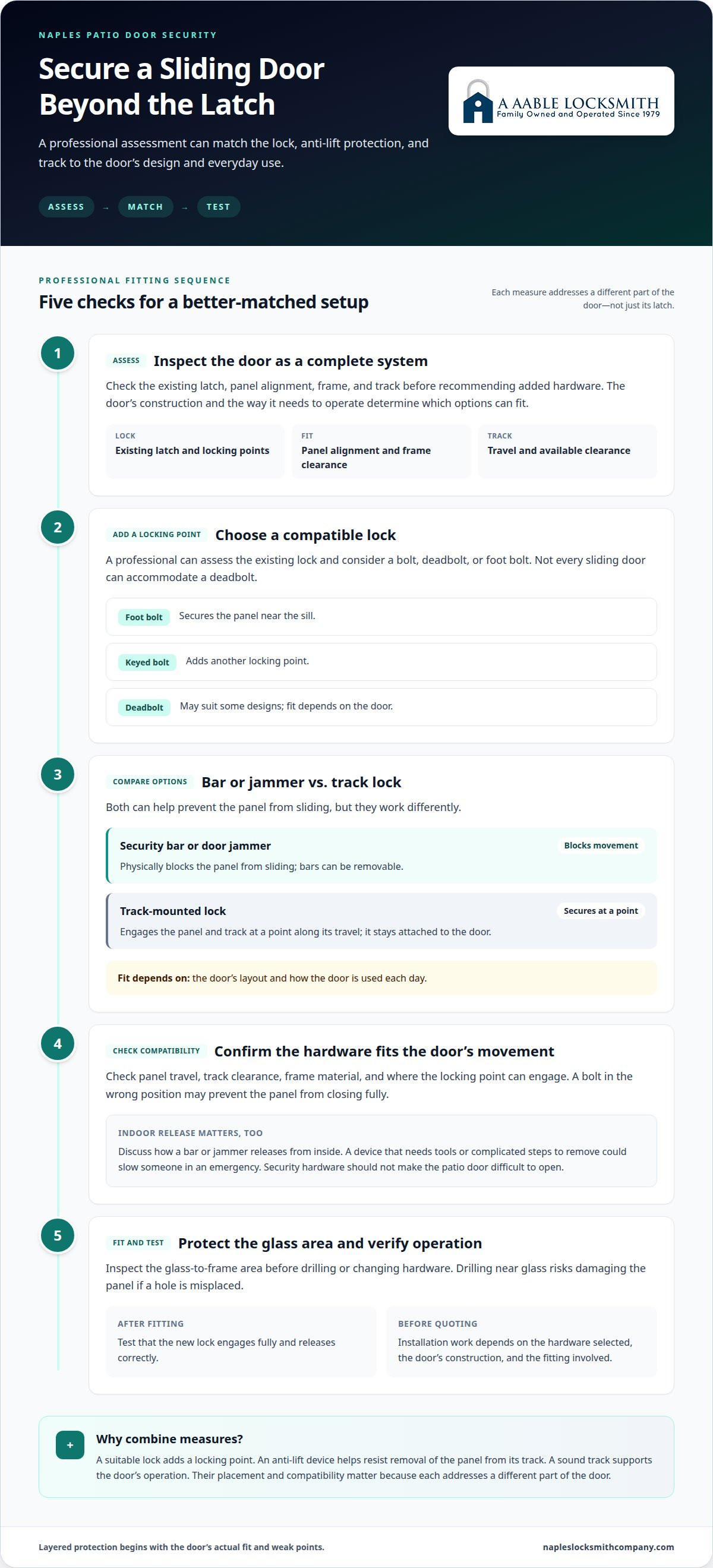
A professional assesses the door, frame, existing latch, and track before recommending added security. The right combination depends on the door’s construction and how it needs to operate.
-
Have a professional upgrade patio door locks
Start with an assessment of the existing lock, then consider a compatible bolt, deadbolt, or foot bolt. A foot bolt secures the panel near the sill, while a keyed bolt adds another locking point. A deadbolt may suit some designs, but not every sliding door can accommodate one. The installer should check panel alignment and frame clearance, then ensure the hardware allows the door to operate smoothly.
-
Compare Bars and Track Locks
Ask a professional to compare a security bar or door jammer with a track-mounted lock. A bar or jammer physically blocks the panel from sliding; a track lock secures the panel at a point along its travel. Bars can be removable, while track locks stay attached to the door. Sliding patio door security bars and track locks work differently: a bar obstructs movement across the opening, while a track lock engages the panel and track. The best fit depends on the door’s layout and daily use.
The work required depends on the hardware selected, the door’s construction, and the fitting involved. A quote for an installation takes these factors into account, since the product alone doesn’t reflect the cost of fitting.
- Ask the installer to match the added lock to the door’s existing latch and frame. A useful compatibility check considers the panel’s travel, track clearance, frame material, and where the locking point can engage. For example, a bolt positioned where the panel cannot close fully may interfere with normal use. A professional can assess these details before selecting and fitting sliding door lock hardware.
- Keep a clear way to open the door from inside when choosing a bar or jammer. A device that requires tools or complicated steps to remove could slow someone during an emergency. Discuss how each option releases from indoors and how household members will use it. Security hardware should not make the patio door difficult to open.
- Have the installer inspect the glass-to-frame area before drilling or changing hardware. Drilling near the glass risks damaging the panel if a hole is misplaced. A professional should also test that the new lock engages fully and releases correctly. These checks help ensure the added hardware works with the door rather than obstructing it.
Are patio doors secure?
Assess the door type, locking points, and glass before deciding what needs strengthening. French, sliding, and hinged patio doors each have different security considerations.
- Identify how the patio door opens and where its lock engages. A sliding panel moves along a track, while a hinged door swings from its hinges and often uses a latch or deadbolt. French-style patio doors have two leaves, so the meeting point between them matters. The door’s design determines which hardware can secure it effectively and which gaps or moving parts need attention.
- For a sliding patio door, consider a multi-point locking system that secures the panel at several places along the frame. This adds locking points beyond a single latch. A keyed secondary lock can provide another point, while an anti-lift device helps resist removal of the panel from its track. Since these measures address different weaknesses, their placement and compatibility matter.
- For French doors, assess how the inactive leaf stays secured. Top and bottom bolts can hold it in place, while the active leaf’s deadbolt engages it when the door closes. If either leaf shifts or the bolts fail to engage properly, the pair may not secure as intended. Have the complete setup checked, including the meeting edges and frame.
- For hinged patio doors, examine the latch, deadbolt, hinges, and frame as connected parts. A deadbolt adds a locking point, but it must align with the strike to engage properly. A loose fit or misaligned door can interfere with operation. Reinforcing the lock alone won’t address every weakness, so assess the surrounding frame and door movement together.
- Consider the glass as well as the lock. Laminated or shatter-resistant glass can make patio-door glass more difficult to break or penetrate. Security film is an option for existing glass when replacement isn’t feasible. Glass protection doesn’t replace sound locking hardware, just as a strong lock doesn’t protect vulnerable glass. Match the measures to the door’s construction and exposure.
- Choose layered protection based on the door’s actual weak points. A sliding door may need resistance to lifting, while a French door may need secure bolts on its inactive leaf. A hinged door may depend more on proper deadbolt engagement and frame condition. For a professional assessment in Naples, consider how the panel, glass, frame, and locks work together rather than judging security by one feature alone.
A forum participant described a French-style sliding patio door with a frame about 8 inches thick around each glass panel. The page recommends anti-lift devices, a keyed secondary lock, and security film to make it harder to lift a sliding glass door off its track or force a weak latch.
A forum participant recommended French doors, stronger doorframes, less glass, and traditional deadbolts for better security. Another recommended checking the inactive leaf’s top and bottom bolts, since the active leaf’s deadbolt throws into it. A commenter suggested a recessed handle, allowing a screen door to occupy the outermost rail while the slider closes without opening or partly opening the screen.
Sliding glass door security from outside
Assess the glass and door hardware as separate parts of the opening. A professional can review each layer and match improvements to the existing patio door.
- Have the installer assess the exposed glass, frame, and locking points together. A stronger pane won’t secure a panel that moves freely, and an added lock won’t protect vulnerable glass. For example, the assessment should distinguish between glass breakage, pressure on the panel, and an attempt to lift it. Each concern calls for attention to a different part of the door.
- Consider laminated or shatter-resistant glass when replacing a patio-door pane. These options can make glass more difficult to break or penetrate, but the choice should suit the existing door assembly. Have the professional assess the pane, its frame, and the door’s operation as a complete installation. A glass upgrade should not interfere with opening, closing, or engaging the lock.
- Discuss security film if the existing glass will remain in place. Film is an option when replacement isn’t feasible, but it doesn’t reinforce a weak lock or stop a panel from being lifted. The installer should assess the glass surface and explain how film fits the door. Treat it as one layer of protection, not a substitute for sound hardware.
- Ask how a proposed film or glass improvement affects everyday use. A patio door still needs to slide smoothly, close flush, and let its lock engage. For example, if an upgrade affects the fit at the frame, the locking points may no longer align as intended. The professional should assess both the security purpose and the door’s function before recommending a change.
- For a hurricane-rated door or glass assembly, distinguish its weather-related rating from protection against forced entry. The rating alone doesn’t show whether the sliding panel resists lifting or whether its lock is secure. Have the full assembly and installation requirements reviewed together. A door designed for severe weather still needs suitable locks, a secure frame, and correctly functioning hardware.
- Ask the professional to explain how each proposed measure addresses a specific weakness. Laminated glass, for instance, addresses glass penetration, while a lock secures the panel at its frame. Security film can be considered for existing glass, and hurricane-rated products should be assessed as complete assemblies. Comparing the options helps prioritize improvements without treating one upgrade as a complete security solution.
Anti-lift devices and reinforced tracks
Have a professional assess whether the sliding panel can rise out of its track. The fit between the panel, rollers, and track helps determine the right security upgrade.
- Have the installer check the panel’s vertical movement before choosing an anti-lift device. The device limits how far the panel can rise, making removal from the track more difficult. The professional should assess the door when closed and during normal operation. Hardware that blocks lifting but binds the panel can create a different problem.
- Ask how the proposed anti-lift hardware will work with the existing frame and rollers. Sliding doors have different clearances, so placement must suit the panel’s movement. For example, a device too close to the panel may interfere with sliding, while excessive clearance may leave room for lifting. The installer should check both security engagement and smooth operation.
- Have the rollers checked along with the track. Worn or misaligned rollers can affect the panel’s position, making the door harder to slide or close fully. This can also change how the panel meets its locking point. A professional assessment should distinguish a roller problem from a damaged track, since each requires a different repair or replacement.
- Consider a reinforced roller system if the existing rollers need attention. The system supports the panel as it travels along the track, while an anti-lift device addresses upward movement. These parts serve different purposes and may need to work together. The installer can assess the panel’s weight, fit, and travel before recommending a compatible combination.
- Discuss track replacement if the existing track is old, warped, or damaged. A distorted track can disrupt panel alignment and make consistent locking difficult. Replacement can restore a more stable path for the rollers, but the new track must suit the door and frame. The professional should inspect the full travel length, not just the area near the latch.
- Ask for the completed door to be tested through a full opening and closing cycle. The panel should move without binding, meet the frame properly, and engage its lock. The installer should also confirm that the anti-lift device restricts upward movement. These checks show whether the track, rollers, panel, and security hardware work together as intended.
- Prioritize repairs based on the door’s condition rather than adding hardware blindly. An intact track with excessive panel lift may call for anti-lift protection, while a warped track may need replacement first. A worn roller system may need attention before either upgrade works reliably. Having a professional identify the cause helps focus the work on the door’s actual weak point.
Preventing sliding doors from being lifted off their tracks
Have a professional assess how the panel fits its track and frame. The goal is to limit upward movement without interfering with normal sliding or locking.
- Have the installer inspect the panel as it opens, closes, and locks. The assessment should identify whether it rises enough to clear the track or whether worn rollers or poor alignment contribute. A door that sits unevenly may need adjustment before added security hardware can work properly.
- Ask whether the existing latch physically prevents lifting when engaged. Some sliding doors have a latch that hooks into a striker on the jamb; when secured, this connection can help keep the panel on its track. The installer should examine how the latch meets the striker rather than judging security by the handle or key cylinder alone.
- Choose an anti-lift device that suits the door’s frame and clearance. Its purpose is to restrict upward movement, not replace the regular lock. The professional should position it so the panel still slides and closes correctly. Hardware that sits too close may bind, while excessive clearance may undermine its intended function.
- Ask the professional to inspect the rollers and track before recommending an upgrade. A worn roller can change the panel’s height, while a warped track can affect its alignment. These conditions differ from a sound panel with excessive lift. Identifying the cause helps determine whether the door needs adjustment, a hardware change, or track work.
- Consider how an added device works with the existing lock. The panel should close fully, the latch should meet its keeper, and the anti-lift feature should restrict upward travel. If a new part prevents the latch from engaging, the door may be less secure despite having more hardware. The installer should test the components together.
- Have the completed installation checked through the door’s full travel. The installer should confirm that the panel slides smoothly, closes flush, and remains seated when locked. A final check should also confirm that the added device doesn’t prevent normal operation from indoors. These functional checks can reveal fit problems that a visual inspection alone may miss.
- Choose the work based on the door’s actual condition. For example, a panel that lifts despite an engaged latch may need anti-lift protection, while a warped track may need repair or replacement first. A professional sliding glass door lock security assessment can connect the observed weakness with a suitable hardware solution.
Request sliding door lock security
A Aable Locksmith
A Aable Locksmith assesses sliding patio doors that feel loose, won’t latch properly, or may lift from their tracks. A professional review can identify whether the main concern is the lock, panel fit, or compatible replacement hardware. The right solution depends on the existing door and frame, so one add-on may not address every weak point.
For homeowners in Naples, Bonita Springs, Golden Gate, North Naples, and East Naples, A Aable Locksmith installs sliding glass door locks and new hardware. Lock rekeying or digital keypad lock installation may also suit related access needs. The assessment focuses on the door’s actual requirements and everyday use.
Contact A Aable Locksmith to discuss your patio door security.
Choose a Clear Next Step for Your Patio Door
The best security for patio doors in Naples depends on how the door fits, locks, and moves in everyday use. Before choosing another device, identify the concern you want addressed, such as a panel that lifts, a lock that no longer engages smoothly, or access that needs updating. A focused assessment can turn that concern into a practical plan without adding hardware that doesn’t suit the door.
A Aable Locksmith helps homeowners in Naples, Bonita Springs, Golden Gate, North Naples, and East Naples with sliding glass door lock security, lock rekeying, and digital keypad lock installation. These services can address patio-door locking concerns and related access needs. Describe what you’ve noticed about the door and discuss the outcome you want for your home.
With a suitable plan, you can make an informed choice and feel better prepared to secure your patio door.
Frequently Asked Questions
What is the best lock for a patio door?
A multi-point locking system is a strong option when the door can accommodate it, because it secures the panel at several points along the frame. For the best security for patio doors in Naples, choose a lock that suits the door’s design and condition. A sliding panel with an existing latch may need different hardware from a hinged patio door. A professional can assess the locking points and recommend a compatible option.
What are the best security locks for patio doors?
The most suitable setup combines a primary lock with compatible added protection. For a sliding door, consider a keyed secondary lock and an anti-lift device alongside the existing latch. These address different weaknesses, so one doesn’t replace the others. The best security for patio doors in Naples depends on how the panel, lock, and track fit together, as well as how the door is used each day.
How can a professional reinforce a patio door frame, track, and glass?
A professional can inspect the frame for secure lock engagement, assess whether a worn or warped track needs replacement, and identify glass improvements suited to the existing door. Laminated or shatter-resistant glass can make penetration more difficult; security film may suit existing glass when replacement isn’t feasible. The assessment considers the frame, panel movement, and lock together, since strengthening one component won’t correct problems in another.


