


Article by
Jonathan Dier
Jonathan Dier is the owner of A Aable Locksmith, a family owned and operated Locksmith company serving the Naples Florida area since 1979. He has over 35 years experience in the Locksmith and Security industry. A Aable Locksmith specializes in residential and commercial security, focusing on customer satisfaction.
Better home security doesn’t always mean replacing every lock. A home locksmith can rekey existing hardware, repair or replace locks, and help match the entry system to your household’s needs. According to the Bureau of Security and Investigative Services, locksmiths can install, repair, open, or modify locks and originate keys for locks.
It’s understandable to want clear answers before someone works on your home’s locks. Rekeying resets a lock’s internal pins so it works with a new key and makes previous keys ineffective. A skilled professional can rekey a lock in 10 to 15 minutes per unit.
This guide explains what a home locksmith can do, how to stay secure while work is underway, and when rekeying makes sense compared with replacing a lock. You’ll also learn what to consider when choosing new or keyless entry, including keypad options, so you can make a practical choice for your home.
Key Takeaways
- Know what to expect during a locksmith visit and how to help keep your home secure while the work is underway.
- Recognize when rekeying may suit sound hardware and when a damaged or compromised lock calls for replacement.
- Weigh the convenience of keypad entry against your household’s access and security needs before choosing a keyless lock.
- Consider how a home security survey or cabinet lock installation can address specific access concerns.
- Understand the practical checks that help you assess the finished work and confirm each lock operates as intended.
How long does it take to rekey a lock?
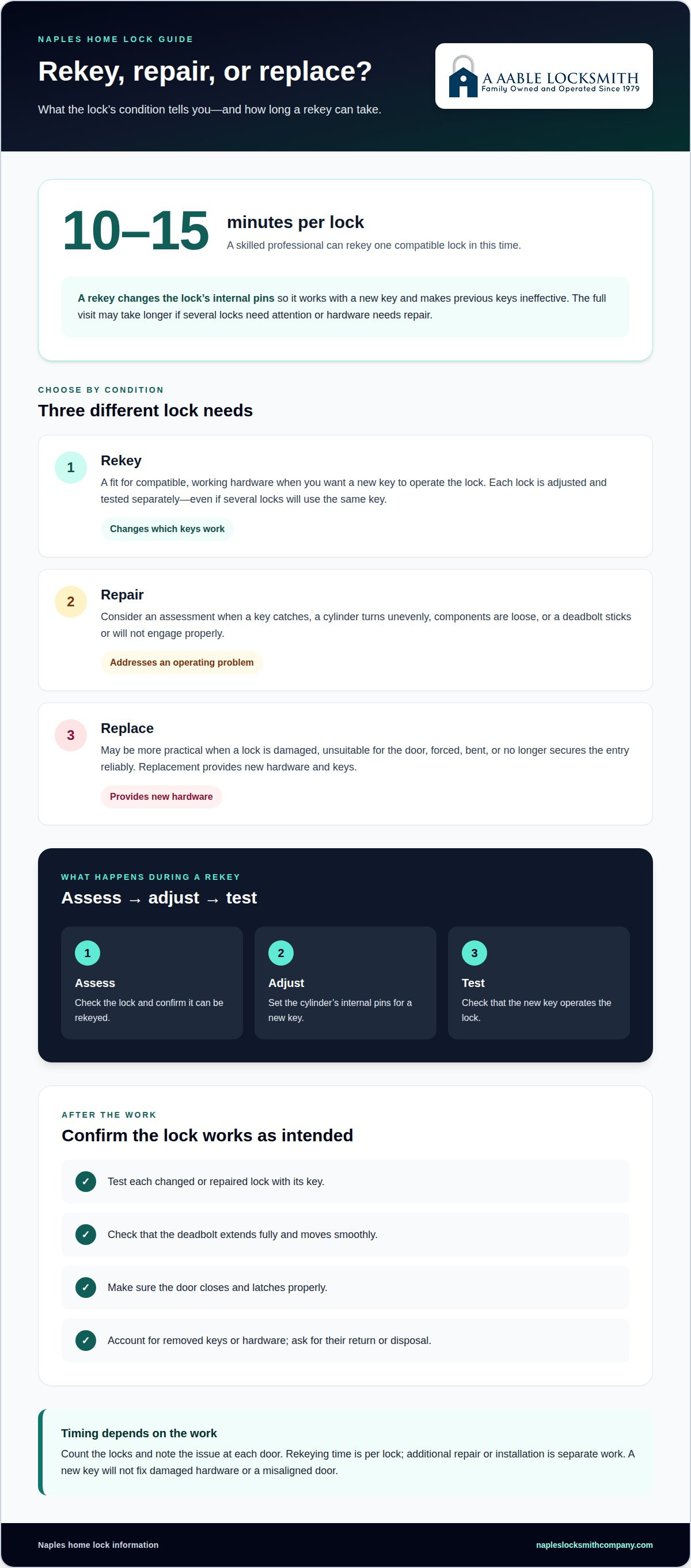
A skilled professional can rekey one lock in 10 to 15 minutes per unit. The full visit may take longer when several locks need attention or the hardware also needs repair. Rekeying changes the lock’s internal pin arrangement so it works with a new key and makes previous keys ineffective.
The process starts with assessing the lock and confirming it can be rekeyed. The locksmith then adjusts the cylinder’s internal pins for a new key and checks that the key operates the lock. Each lock needs to be rekeyed and tested separately, even when several locks will use the same key.
For example, a home with separate front and back door locks needs each compatible cylinder rekeyed and tested. If a key turns roughly or a deadbolt sticks, the locksmith can assess whether repair is needed instead of rekeying alone. A new key won’t fix damaged hardware or a misaligned door.
The Bureau of Security and Investigative Services describes locksmith work as installing, repairing, opening, or modifying locks and originating keys. The right solution depends on the type and condition of the hardware, not simply on how quickly its key can be changed.
Installing a lock is different from rekeying one. For a new deadbolt, the locksmith fits the hardware to the door and tests its operation with the key. If the bolt doesn’t move smoothly into its opening, the work may involve adjusting the lock or door alignment. The time required depends on the existing door and hardware.
Lock repair can address a sticking cylinder, loose components, or a deadbolt that won’t engage properly. If the lock is damaged or unsuitable for the door, replacement may be more practical. A locksmith can examine the hardware and explain the options instead of treating every problem as a rekeying job.
For homes in Naples, a residential locksmith service can address rekeying, installation, and repair needs. During service, the professional can test each operated lock and key, including a deadbolt, before finishing.
Pay attention to signs of wear before a lock stops working. A key that catches, a cylinder that turns unevenly, or a deadbolt that no longer seats smoothly are reasons to request an assessment. Rekeying changes which keys operate the lock, but doesn’t restore worn hardware. Maintenance, repair, and replacement address different conditions.
When timing matters, count the locks and identify the issue at each door. A single compatible lock may take 10 to 15 minutes to rekey, while additional repairs or installation add separate work. That distinction helps set realistic expectations for the visit and keeps the focus on dependable operation and security.
How do I ensure my home remains secure during a locksmith service?
Before a home locksmith arrives, ask for the technician’s name, company identification, and expected arrival time. When they arrive, compare those details with the technician’s identification. A marked vehicle and uniform can also help identify the professional. Confirm who is at your door before discussing access to your home.
Locksmith work can include installing, repairing, opening, or modifying locks and originating keys, according to the Bureau of Security and Investigative Services. For a house or apartment lockout, explain which door is affected and whether the key is lost, inside, or no longer turns. This helps the technician assess the entry and lock before work begins.
For a lockout, ask about an entry method that avoids unnecessary damage to the door and hardware. The approach depends on the lock, the door, and the cause of the lockout. A key stuck in a front-door cylinder, for example, poses a different problem from a deadbolt that won’t retract. If opening the lock without damage isn’t possible, discuss the next step before work proceeds.
- The property address and whether it is a house or apartment.
- The entry affected, such as the front door or a side entrance.
- What happened, such as a lost key, a jammed cylinder, or a key left indoors.
- Any visible lock details, if you can describe them without delaying urgent assistance.
Keep track of removed keys or hardware during rekeying or replacement. Ask the technician to return them or dispose of them so surplus keys don’t remain in circulation. After the work, test each repaired or changed lock yourself. Check that the key turns, the deadbolt extends fully, and the door closes and latches properly.
Safe lockouts are different from ordinary residential door lockouts. Safe mechanisms differ from door locks, so describe the safe and access problem clearly when requesting help. Don’t assume that service for house or apartment doors includes safe opening. Distinguishing between these needs helps clarify what work is involved.
During emergency lockout assistance, stay near the entry while keeping other doors secured. Once access is restored, account for the keys and confirm the lock works before leaving the door unattended. These steps apply whether the technician opens an apartment entrance, repairs a house lock, or changes hardware after a lost key.
When to replace door locks
Moving into a new home is a good time to reassess who may have keys. Previous owners, occupants, or people who received copies could still have access. Replacing locks gives you new hardware and keys; rekeying changes which keys operate compatible, working locks. The right choice depends on the lock’s condition and whether you want to keep it.
After a burglary or attempted break-in, inspect the affected door and lock for visible damage or unreliable operation. A lock that has been forced, bends, or no longer secures the door may need replacement rather than rekeying. A locksmith can assess the hardware and determine whether repair or new installation is the better response.
A lost key calls for a different decision. Consider replacing the lock if the key was lost with your address or other identifying information. If it was simply misplaced, consider whether someone could connect it to your home. This helps determine whether to change access or replace the hardware.
Duplicating a key creates another working copy, but it doesn’t disable a missing key. If you’re concerned that an unaccounted-for key could be used, making another copy won’t resolve the issue. A locksmith can assess whether the existing lock can be rekeyed or whether replacement better suits the situation. Keep track of who receives new keys.
Hardware condition matters, too. A key that repeatedly sticks, a cylinder that turns unevenly, or a deadbolt that doesn’t move smoothly may indicate a repair issue. If the lock is damaged or worn, replacement may be more suitable than making additional keys. The locksmith can examine the lock and door together, since poor door alignment can affect bolt operation.
For a mailbox or cabinet, assess the specific lock and what it protects. A mailbox lock that no longer secures the compartment may need replacement; a cabinet lock can help control access to stored items. These needs differ from replacing an exterior entry lock, so describe the location and problem when arranging service.
Before choosing a solution, identify why the lock needs attention: a move, forced entry, a lost key, or unreliable operation. Have the lock and door assessed, then discuss whether repair, rekeying, or replacement fits. After installation, test the lock with its new key and confirm the door closes and secures properly. Keep track of new keys and don’t leave spare copies where someone unknown could access them.
Electronic keyless locks
An electronic keyless lock lets an authorized person enter using a keypad code instead of a conventional key. For a household that shares access, this can change how entry is managed. For example, a front-door keypad can avoid handing out another physical key whenever someone needs access.
Keyless describes the entry method, not one specific lock design. Electronic locks vary by model, and their functions depend on the hardware. Before choosing one, consider which door needs access control, who will use it, and whether the lock suits the existing door. A front entrance used daily has different needs from a door used occasionally.
Manage codes thoughtfully. Decide who needs access and avoid sharing a household code more widely than necessary. If someone no longer needs entry, changing access is useful only if the lock supports it. Before installation, ask how the model handles code changes and everyday use. Keypads don’t all work the same way.
Fit matters as much as the electronic function. The locksmith assesses the door, existing hardware, and lock position before installation. For example, a replacement keypad lock must fit the door’s existing preparation or allow for suitable adjustments. The latch and deadbolt must move correctly, and the door must close securely. A keypad can’t compensate for a misaligned door.
Consider your household’s routine before selecting a model. A family that regularly shares access with a caregiver may value controlled code entry. Someone who prefers a familiar key may choose conventional hardware instead. Consider whether each regular user can operate the keypad comfortably and follow the selected model’s instructions.
Have a plan for using electronic hardware if entry becomes difficult. Keep the manufacturer’s instructions accessible and understand the model’s stated method for managing access. Don’t rely on a feature unless the product instructions confirm it. During installation, ask the locksmith to demonstrate normal operation and explain the controls for that specific lock.
A locksmith can help match keypad hardware to your door and install it with attention to fit and operation. Before work begins, share the door’s location, current lock type, and household access needs. This information helps guide the hardware choice. After installation, follow the model’s instructions and make sure each intended user understands how it works.
For example, a household replacing a front-door deadbolt can compare an electronic keypad model with a conventional lock based on how residents enter and share access. The goal isn’t simply to choose the newest mechanism, but to find hardware suited to the door and household routine. A well-chosen lock supports convenient access while maintaining secure door operation.
Keyless entry and security systems
A skilled locksmith matches lock upgrades to each entry point, household routine, and security concern. Keyless entry is one option, alongside suitable deadbolts, high-security locks, and sliding glass door security.
Keyless Entry Systems
Keyless entry replaces a traditional key at a selected door with keypad access. Consider who needs entry, how codes will be managed, and whether the door and existing hardware suit the lock. A keypad at a frequently used entrance, for example, may serve a different purpose from one at a rarely used door.
A keypad is an access method, not a complete security system. It controls entry at the lock where it’s installed; other doors still rely on their own hardware. Consider the whole home: a keypad on the front door won’t address a weak sliding glass door or an unsecured cabinet. Prioritize upgrades by entry point.
Before installation, a locksmith assesses the door and checks that the lock fits. The locksmith can explain the model’s functions and demonstrate normal operation after installation. Make sure you understand how the selected keypad manages access, and follow its instructions. Don’t assume every electronic lock offers the same features or controls.
Lock Types and Security Upgrades
A deadbolt or high-security lock system may suit a main entry, depending on the door and household’s needs. A skilled locksmith considers the existing hardware, door condition, and how the entrance is used. A sliding glass door needs dedicated security hardware designed for that type of opening.
Upgrades work best when they address specific vulnerabilities. A new home security survey can help identify which doors or other access points need attention. For instance, a home with a sound front-door lock but a poorly secured sliding door may benefit more from improving that secondary entry than from replacing every lock.
Consider access points beyond the front entrance. A cabinet lock can restrict access to selected stored items, while a mailbox lock protects access to mail. For property perimeters, automated entry gates offer an additional layer of security; companies like Gate Tech Pros design and install automated gate systems to manage exterior access. These upgrades serve different purposes from exterior door hardware. List the doors and access points that concern you so the locksmith can assess priorities and compatible options.
Once you’ve chosen the hardware, have the locksmith install and test it at the intended opening. The lock should operate with the door closed, and its controls should be clear to everyone who uses it. A tailored plan balances keyless convenience with suitable mechanical security, rather than treating one electronic lock as a substitute for every home security measure.
A Aable Locksmith: Cabinet Locks Installed
A Aable Locksmith helps Naples homeowners address specific access and lock concerns, including installing cabinet locks for household supplies or personal items. A cabinet lock can provide a practical way to limit access without changing the home’s exterior entry hardware.
For broader concerns, a New Home Security Survey can help identify doors and access points that may need attention. Digital Keypad Lock Installation offers keyless entry at a doorway. Lock Rekeying can change which keys operate compatible existing locks when the hardware remains suitable.
Consider the access issue you want to solve, whether it involves a cabinet, a door, or keys that may still be in circulation. Contact A Aable Locksmith to discuss the right residential locksmith service for your needs.
Make a Confident Next Move for Your Home
Start with the door or access point that concerns you most. A home locksmith can help turn that concern into a practical plan, whether you want to update one entry or review several areas. Consider how your household uses each door, who needs access, and whether the existing hardware works as intended.
A Aable Locksmith offers Lock Rekeying, Digital Keypad Lock Installation, and Sliding Glass Door Lock Security. These services address different needs, from changing key access to adding keypad entry or securing a specific door. A New Home Security Survey can help homeowners consider access points together instead of treating each lock as an isolated decision.
You don’t need to settle every hardware choice before taking the next step. Discussing the doors, keys, and access concerns that matter to you can clarify a sensible direction. Start with the issue you want resolved, then consider an approach suited to your home.
With a clear priority in mind, you can move forward with greater confidence about access to your home.
Frequently Asked Questions
What is a locksmith?
A locksmith is a professional who works with locks, keys, and related entry hardware. According to the Bureau of Security and Investigative Services, locksmith work can include installing, repairing, opening, or modifying locks and originating keys. For a homeowner, this may mean resolving a malfunctioning entry lock, updating access to existing hardware, or fitting a new lock. The specific work depends on the lock and the problem.
How much does it cost for a locksmith to unlock a house?
The cost depends on the lockout and the work needed to restore access. Factors include the entry door, the lock type, whether the hardware is damaged, and whether additional repair or replacement is needed. The price depends on the case and is given after a quote request. Describe the affected door and what happened, such as a lost key or a key that will not turn.
How much does a residential locksmith cost in the U.S.?
There isn’t one home locksmith cost that applies to every job in the United States. Rekeying, lock repair, and new hardware installation involve different work, and the number and type of locks affect the scope. A quote should reflect the specific service and condition of the hardware. For example, assessing one lock differs from work involving several doors and a damaged lock.
How do I find a licensed and reputable home locksmith near me?
Look for a home locksmith with the credentials required in the service location and active insurance. A business with a physical address provides a clearer point of identification than one listing only a post office box. You can also consider membership in a professional group, such as ALOA. For service in Naples, focus on local residential locksmith experience and a clear description of the work being arranged.
How can I verify a locksmith’s identity and avoid scams?
Before the appointment, ask for the technician’s name, company identification, and expected arrival time. At the door, compare the technician’s identification with those details, and look for a marked vehicle or uniform. Be clear about the lockout or repair before work starts. Afterward, account for removed keys or hardware and test the affected lock yourself to confirm it operates as expected.
What should I do if I’m locked out of my house?
Stay in a safe place and contact a locksmith for help rather than forcing the door or lock. Describe the property type, affected entrance, and whether the key is lost, inside, or stuck. If you’re in an apartment, mention any building access arrangements that affect reaching the door. Once entry is restored, check that the lock and door work properly before leaving.
Should I rekey or replace my home locks?
Rekeying may suit a lock that works properly when you want previous keys to stop operating it. Consider replacement if the hardware is damaged, unreliable, or no longer suits the door. After moving in or following an attempted break-in, assess both access and lock condition. A locksmith can examine the hardware and explain whether rekeying, repair, or replacement addresses your concern.
How long does it take for a locksmith to rekey or replace a lock?
A skilled professional can rekey a lock in 10 to 15 minutes per unit. Replacing a lock takes a different amount of time because the work depends on the door, existing hardware, and any fitting or adjustment needed. Several locks also mean separate work at each opening. The locksmith can assess the specific job and explain its expected scope before starting.


