


Article by
Jonathan Dier
Jonathan Dier is the owner of A Aable Locksmith, a family owned and operated Locksmith company serving the Naples Florida area since 1979. He has over 35 years experience in the Locksmith and Security industry. A Aable Locksmith specializes in residential and commercial security, focusing on customer satisfaction.
What if the lock is the strongest part of your front door, but the frame or hardware is the weak link? In Naples, learning how to improve front door security starts with looking at the whole entry, not just checking that the deadbolt turns. A locked door may still need attention if the hardware is loose, the door is misaligned, or the frame is damaged.
Whether you need a repair, a rekey, or new hardware depends on what you find. Replacing the entire door may not be necessary. This guide explains how to inspect the door, frame, hinges, strike plate, deadbolt, and handleset so you can spot potential weak points and prioritize practical improvements.
You’ll also learn when rekeying can help restore control over who has keys, and when professional hardware installation or a high-security lock system may be worth considering. A Aable Locksmith is family-owned and has served Naples and nearby communities since 1979. The company installs digital keypad locks, rekeys locks, and upgrades hardware to help homeowners choose a practical next step for their entry.
Key Takeaways
- To learn how to improve front door security, inspect the door, frame, hinges, lock, and key practices as one entry system.
- Notice whether the deadbolt aligns and operates smoothly. Repeated sticking can point to a fit or hardware issue.
- Choose the next step based on the problem: repair a malfunctioning lock, rekey after a change in key access, or replace worn or unsuitable hardware.
- Use a simple inspection routine and review key control before leaving your Naples-area home vacant for a season.
- A locksmith can assess persistent lock or frame concerns and help determine whether rekeying, a deadbolt upgrade, or other hardware work fits the entry.
How to Improve Front Door Security by Assessing the Whole Entry
A dependable front door is more than a lock. The lock controls one point of access, while the complete entry includes the door, frame, hardware, and key-control practices working together. A deadbolt can be locked while the door is misaligned, the frame is loose, or someone you no longer trust still has a working key. These are useful clues about where an improvement may help.
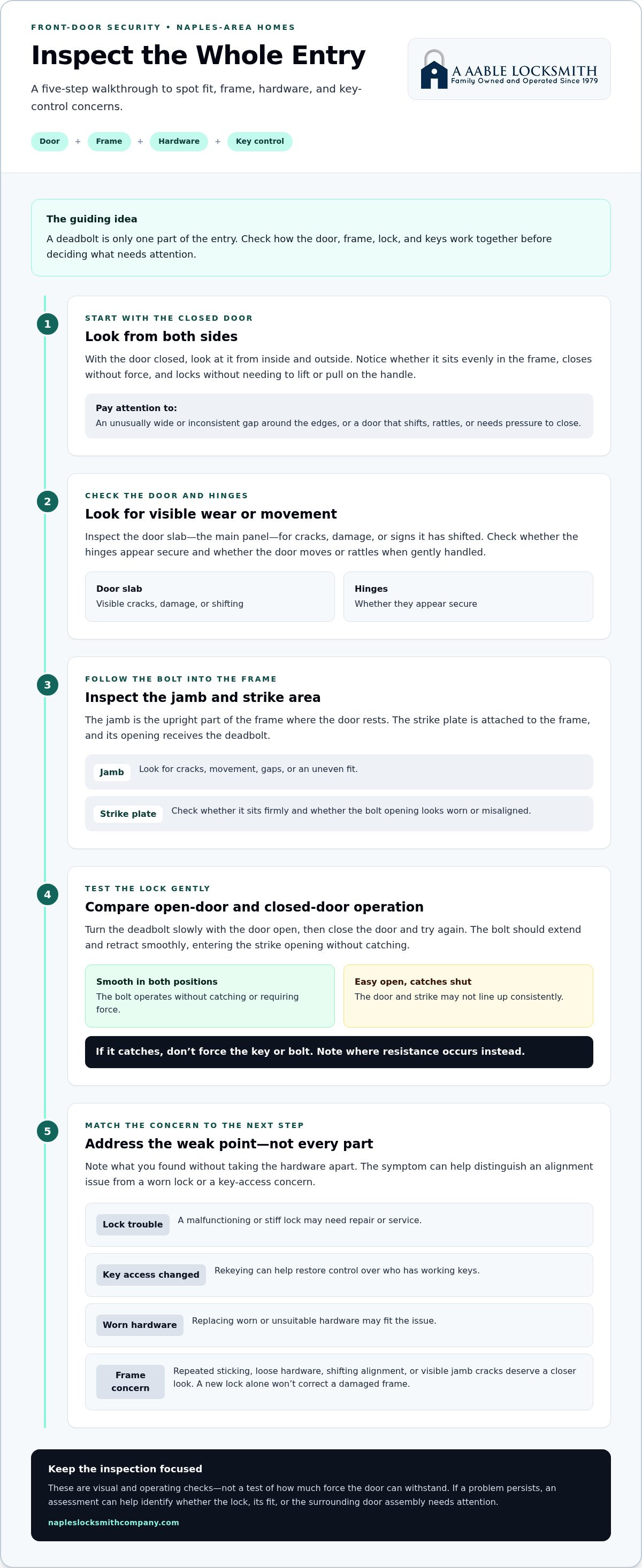
To start learning how to improve front door security, look at the closed door from inside and outside, then operate it as you normally would. You don’t need to remove hardware. Notice whether the door sits evenly in the frame, closes without force, and locks without lifting or pulling on the handle. These checks help separate a hardware problem from an access-control concern.
Which parts of a front door should you inspect?
Look over the door slab, the main panel itself, for visible cracks, damage, or signs that it has shifted. Check whether the hinges appear secure and whether the door moves or rattles when gently handled. The jamb is the vertical part of the frame where the door rests when closed. Inspect it and the strike area, where the deadbolt enters, for cracks, movement, gaps, or an uneven fit.
- Close the door and look for an unusually wide or inconsistent gap around its edges.
- Turn the deadbolt slowly. It should extend and retract smoothly rather than catch or require force.
- Check that the door stays closed and that the latch and deadbolt line up with their openings.
These are visual and operating checks, not a test of how much force a door can withstand. If something looks loose or the lock works only when you push, pull, or lift the door, note the symptom instead of taking the hardware apart. That observation can help pinpoint whether the issue involves alignment, wear, or installation.
What does a layered front-door security approach mean?
Layering means considering both the physical entry and control over who can unlock it. The door and frame need to fit together properly, hardware needs to operate as intended, and keys should remain with people you trust. General door security measures include components such as deadbolts, strike plates, and frame reinforcement. The right focus depends on what your inspection reveals.
Convenience and security can overlap, but they aren’t the same thing. A keypad can change how household members enter, for example, while the door’s fit and hardware still matter. Treat access features as one part of the picture, not a substitute for a sound entry. This whole-door perspective helps you prioritize a specific repair or upgrade instead of replacing parts that are working well.
How the Door, Frame, Deadbolt, and Strike Plate Work Together
A deadbolt doesn’t secure a door on its own. When you turn the lock, the bolt extends from the door into an opening in the strike plate, the metal piece attached to the frame. The surrounding frame supports that connection. The jamb is the upright part of the frame against which the door closes. If any of these parts are loose, damaged, or poorly aligned, the lock may not operate smoothly.
Lock quality and installation both matter because a well-made lock can’t work as intended if it’s fitted incorrectly or doesn’t align with the door and frame. That’s why improving front door security means checking how the components work together, not simply choosing a different lock.
How do a deadbolt and strike plate secure a front door?
With the door closed, the deadbolt should extend into the strike plate opening without catching. The strike plate needs to sit firmly against the jamb, with the bolt entering cleanly when you turn the lock. A loose plate, worn opening, or bolt that scrapes the edge can make locking awkward and may signal that the door or hardware needs attention.
Try operating the lock with the door open, then close the door and try again. If it works easily when open but catches when shut, the door and strike may not line up consistently. Don’t force the key or bolt. Forcing it can make the mechanism harder to use and obscure the source of the problem.
When might the door or frame need professional attention?
Repeated sticking, shifting alignment, loose hardware, or visible cracks around the jamb deserve a closer look, especially if the problem returns after you change how the door is closed. The right adjustment depends on the door’s condition. Adding or changing a lock won’t correct a damaged frame, and adjusting the frame won’t resolve a worn lock mechanism.
A locksmith can assess whether the trouble comes from the lock, its fit, or the surrounding door assembly, then recommend a repair or hardware installation suited to the entry. If the deadbolt needs replacement or proper fitting, professional deadbolt installation can address both the lock and how it operates in the door.
- If the bolt catches only when the door is closed, note where it seems to meet resistance.
- If the strike plate moves or the jamb shows damage, don’t rely on a new lock alone to solve the issue.
- If the lock is stiff in both open and closed positions, the mechanism itself may need service.
These details help narrow down the next step without dismantling the hardware. A careful assessment keeps the focus on the part that needs attention, so an upgrade can support the complete entry rather than leave another weak point overlooked.
Front-Door Security Upgrades: Match the Fix to the Weak Point
The right improvement depends on what’s actually wrong. A lock that sticks, uncertainty about who has a key, and worn hardware are different problems, so they call for different next steps. A repair may restore reliable operation, rekeying can change which keys work, and new hardware may address worn or unsuitable components. This problem-first approach to how to improve front door security helps you avoid replacing parts that are still doing their job.
| What you notice | Possible next step | What it addresses |
|---|---|---|
| The lock sticks or is difficult to operate | Lock repair or assessment | A problem with the existing mechanism or its operation |
| You’ve moved or keyholders have changed | Rekeying | Which keys can operate a compatible lock |
| Hardware is loose, worn, or poorly fitted | Hardware replacement or installation | The condition and fit of the hardware |
| You’re considering a different level of lock hardware | Assess the entry and available options | Whether an upgrade suits the door and its use |
Use the table as a starting point, not a diagnosis. For example, a deadbolt that catches only when the door is closed may have an alignment issue, while a key that turns poorly even with the door open may point to the lock itself. A professional assessment can help distinguish the two before you choose a repair or replacement.
When is rekeying useful, and when is a hardware change more relevant?
Rekeying changes which keys operate a compatible lock, making it a practical access-control step after moving into a home or changing who should have key access. It doesn’t strengthen the door, repair a damaged lock, or fix hardware that’s loose or misaligned. If the concern is a lost key or uncertain key control, residential lock rekeying may fit. If the lock or handleset is worn or doesn’t fit properly, repair or new hardware may be more relevant.
How should you think about keypad and high-security lock options?
A keypad can offer another way to manage entry, but convenience alone doesn’t correct a poor fit or a damaged frame. Consider it as one part of the entry, not a substitute for sound hardware. If an upgrade is appropriate, high-security lock options may be worth considering in relation to the door and its condition. For a focused look at lock choices, see this front-door lock guide.
When the symptoms are unclear or the lock continues to give trouble, a locksmith can assess the existing hardware and match the next step to the entry. A professional assessment and installation can clarify whether repair, rekeying, or a hardware change best addresses the concern.
A Practical Front-Door Security Checklist for Naples-Area Homes
A brief walk-through can help you catch changes before they become daily frustrations. Follow these steps in order, using only your eyes and the lock as you normally operate it. The goal isn’t to test the door with force or take hardware apart. It’s to notice whether the entry works consistently and whether your household’s key access still makes sense.
- Close the door normally. Check that it sits evenly in the frame and latches without a shove, lift, or pull on the handle. If you need to adjust the door each time to get it shut, make a note of that pattern.
- Operate the lock from both sides. Turn the deadbolt and handle as you usually would. The lock should move without unusual force, and the door should remain secure once locked. Notice whether the lock works differently with the door open than it does when closed.
- Look over exposed hardware. Check visible hinges and the strike area for movement, damage, or signs of wear. Pay attention after home maintenance or work near the entry, since the door’s operation may change after adjustments or hardware work.
- Check how household members use the entry. Make sure everyone who uses the door knows how to latch and lock it fully. A consistent routine helps prevent the door from being left only partly secured during a busy day.
- Review key access. Think about who has a key now, including people who may have had access during a previous living arrangement or household change. If that access should no longer continue, treat it as a separate issue from the door’s physical condition.
Before leaving a Naples-area home vacant for an extended period, repeat the door check and consider every entrance your household regularly uses. Test that each one closes and locks as expected instead of assuming it does because it worked the last time you left. Review who holds keys and whether a move, change in household access, or misplaced key has changed your comfort level. Rekeying can address access to a compatible lock when key control has changed, but it won’t correct a door or hardware problem.
Make the inspection part of a seasonal departure routine, and repeat it after moving in or after maintenance that could affect the door or its hardware. If you notice recurring sticking, looseness, or visible frame damage, record where and when it happens. That detail can help a locksmith assess whether the concern relates to the lock, its fit, or the entry as a whole.
These checks are a practical starting point, not a substitute for addressing a persistent problem. A new-home security survey can help identify concerns around the entry and guide your next step.
When a Naples Locksmith Can Help Improve Front-Door Security
A lock that repeatedly sticks, a door that keeps shifting out of alignment, visible frame damage, or uncertainty about who still has a key are good reasons to get a professional assessment. These problems don’t all call for the same fix. A locksmith can identify whether the concern involves the lock, its installation, the surrounding hardware, or key access, helping you decide how to improve front door security without assuming the whole door needs replacing.
What can a locksmith assess during a front-door security visit?
An assessment can consider how the door closes and locks, whether the hardware is secure and properly aligned, and what access the household needs. The recommendation should relate to what’s observed. A recurring lock issue may call for repair, while a change in who has keys may point to rekeying. If the hardware itself needs attention, deadbolt or new hardware installation may be appropriate.
A Aable Locksmith conducts security surveys, including new-home surveys, to help identify practical concerns around an entry. The company also provides same-day service. The work should fit the door’s condition, whether that means addressing a specific component or considering broader improvements.
How can you take the next step with confidence?
Before arranging an assessment, note what happens when you use the door. Does the lock catch only when the door is closed? Did the trouble start after maintenance or a move? Has anyone’s access to a key changed? Sharing these details gives the locksmith useful context and helps focus the visit on your concern.
It’s reasonable to expect a clear explanation of the options. A tailored assessment can distinguish a repair from rekeying or hardware installation without defaulting to full replacement. A Aable Locksmith is family-owned and third-generation, serving Naples and nearby communities since 1979. The company’s local experience brings a practical perspective to residential security work.
If the entry has a recurring problem or you’re unsure whether the keys are still under your control, a professional review can clarify the next step. A Aable Locksmith offers free estimates for its work, so you can understand practical options for your door.
Choose a Practical Next Step for Your Home
Front-door security is part of caring for a home, not a reason to replace everything at once. Household routines and access needs can change, so the most useful next step is one that fits your circumstances now. Consider what would make the entry work better, whether that means resolving a persistent concern, managing access more easily, or getting an expert’s perspective before making a change.
A Aable Locksmith brings a family-owned, third-generation perspective and more than 45 years of residential and commercial security experience to front-door concerns in Naples, Bonita Springs, Estero, Golden Gate, North Naples, East Naples, and Marco Island. If you’re still weighing how to improve front door security, the company can help you understand practical options for your home.
Take it one considered step at a time. A clear plan can help make your entry feel more dependable for the people who use it every day.
Frequently Asked Questions
What is the most important part of front-door security?
The most important part is how well the entry works as a whole, rather than any single lock. A strong lock won’t resolve a door that doesn’t close properly, and careful key control won’t fix worn hardware. To decide how to improve front door security, consider the physical condition of the entry alongside who can access it. The priority may differ from home to home, depending on what you notice and how the household uses the door.
Does a deadbolt make a front door secure?
A deadbolt can be an important part of front-door security, but it can’t secure the entire entry by itself. It needs to operate correctly and fit the door and frame as intended. If the bolt is difficult to turn or the door shifts when you lock it, the lock may not be working smoothly in its setting. Think of a deadbolt as one component to assess, not a guarantee about the whole door.
Can I improve front-door security without replacing the whole door?
Yes. Replacing the whole door may not be necessary if the door itself remains in suitable condition. Depending on the problem, a locksmith may be able to repair a lock, rekey a compatible one, or install new hardware such as a deadbolt or handleset. For example, if your concern is who has a key, changing the lock’s key access addresses a different need than replacing worn hardware. The door’s condition helps guide the decision.
How do I know if my front door frame is weak?
Visible cracking, movement, or damage around the jamb or lock area can signal that the frame needs closer attention. You might also notice that the door no longer sits consistently in its opening or the lock’s bolt doesn’t line up as it used to. Don’t try to judge the frame’s strength by forcing the door. If you see damage or the problem persists, a locksmith can assess whether the issue relates to the frame, alignment, or hardware.
Should I rekey my locks after moving into a new home?
Rekeying after a move is a practical way to change which keys operate compatible locks, particularly if you don’t know who may still have a copy. It can be useful even when the existing hardware works normally. Rekeying doesn’t replace damaged hardware or correct a door that sticks, so treat those as separate concerns. If you’ve moved within Naples or a nearby community, consider key access along with your other move-in security tasks.
Are keypad locks enough to improve front-door security?
A keypad lock can change how household members enter, but it isn’t a complete security solution on its own. The door, frame, and installed hardware still need to be in suitable condition, and access codes should be managed thoughtfully. Consider who needs entry and how you’ll handle changes in household access before choosing a keypad. A Aable Locksmith installs digital keypad locks and can help match the hardware to the needs of the entry.
How often should I check my front-door locks and hardware?
Check the door during ordinary use and give its operation a closer look after a move, maintenance near the entry, or any change in how it closes or locks. There’s no need to dismantle hardware or follow an arbitrary calendar interval. Homeowners in Naples, Bonita Springs, Estero, Golden Gate, North Naples, East Naples, and Marco Island can make a quick check part of seasonal home routines, especially before leaving the property vacant.


