


Article by
Jonathan Dier
Jonathan Dier is the owner of A Aable Locksmith, a family owned and operated Locksmith company serving the Naples Florida area since 1979. He has over 35 years experience in the Locksmith and Security industry. A Aable Locksmith specializes in residential and commercial security, focusing on customer satisfaction.
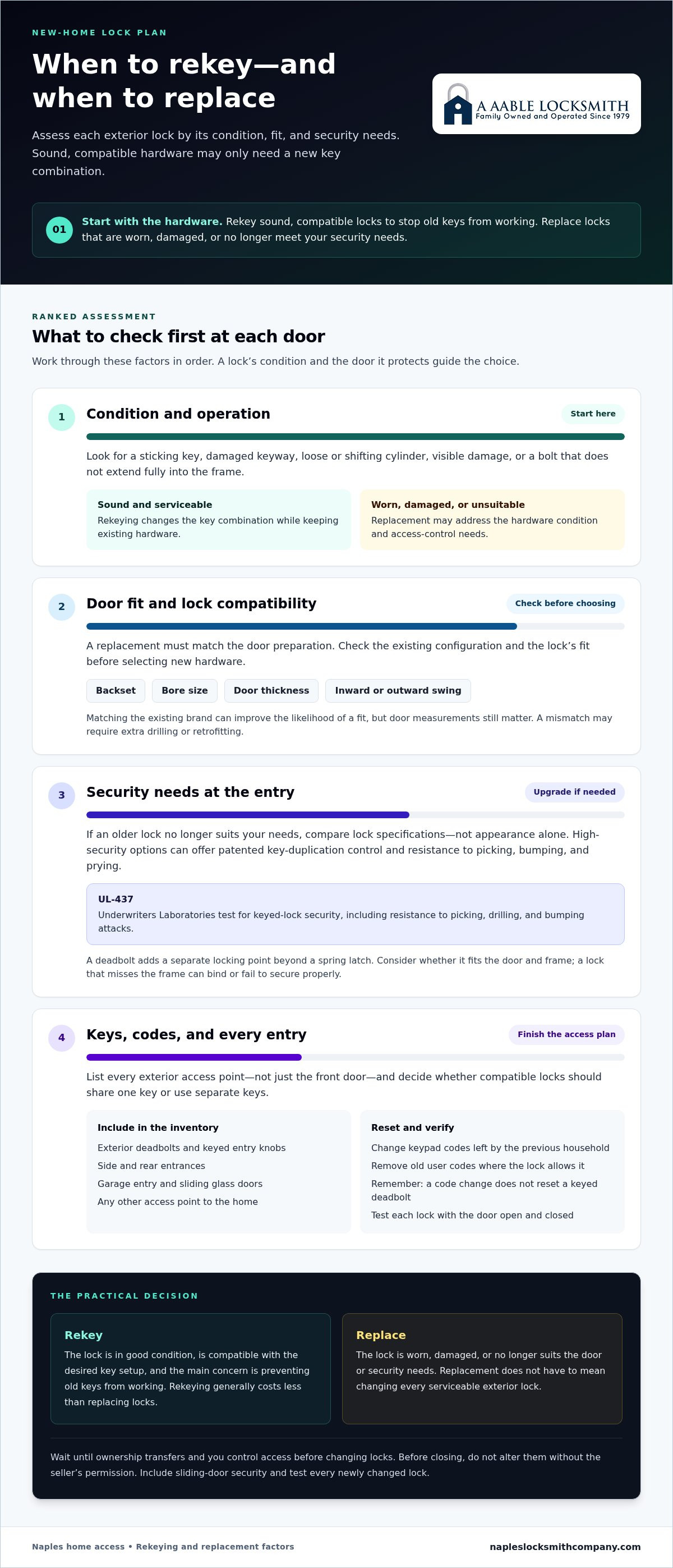
A new home doesn’t always need new locks, but it does need a fresh key plan. To change locks on a new house in Naples, rekey sound, compatible locks to prevent old keys from working while keeping the existing hardware. Replace locks that are worn, damaged, or no longer meet your security needs. Include every exterior door, not just the front entrance.
It’s natural to wonder whether rekeying is enough or whether replacing the locks is the safer move. The right choice depends on the condition and type of each lock, and whether you want added protection such as a deadbolt or improved sliding-door security.
This guide explains when rekeying makes sense, when replacement is a better fit, and how to account for every exterior entry. You’ll also learn what to consider when adding deadbolts and planning a consistent key setup, so you can make an informed decision about your home’s security.
Key Takeaways
- Rekey sound locks to stop old keys from working; replace hardware that’s worn, damaged, or no longer suits your security needs.
- Plan for every exterior entry, including side and rear doors, sliding glass doors, and any other access point to the home.
- Consider a deadbolt where it fits your door and security needs, and test each newly installed lock to make sure it operates smoothly.
- Review whether you want separate keys or a single key for compatible locks, and update any keyless entry codes after moving in.
- For help deciding between rekeying and replacement, look for a locksmith whose residential services address your specific locks and entry points.
Changing access after moving into a home
Change or rekey the exterior locks as soon as closing is complete and you control access to the property. If you plan to change locks on a new house in Naples, start by identifying every entrance and assessing which locks still work well. This gives you a clear first step toward controlling who can enter.
Before closing, don’t alter locks unless the seller gives permission. Changing them without permission can block the seller, agents, or authorized workers and create an access dispute. Wait until ownership transfers and you have authority over the property before changing its locks.
For a practical look at replacing an exterior deadbolt, watch this step-by-step video:
Begin with an access list, not just the front-door lock. Include each exterior deadbolt, keyed entry knob, side entrance, garage entry, and sliding glass door. Note which doors currently share a key and which require separate keys. This inventory helps you catch an overlooked entrance where an old key may still work.
Rekeying changes a lock’s key combination, so previous keys no longer operate it. In Naples, rekeying existing locks generally costs less than replacing them. It can also let compatible locks throughout the property work with one key. This suits homeowners whose hardware is in good condition and whose main concern is old-key access.
Replacement is a better fit when a lock is damaged, worn, or unsuitable for the door. For an older lock that no longer meets your needs, consider high-security lock options as part of your replacement plan. The choice to change locks on a new house in Naples can vary by entry, so serviceable hardware doesn’t always need replacement.
Some lock brands let homeowners rekey their locks without replacing the hardware. Check the instructions for your specific model before beginning. For new locks, a locksmith or hardware store can key compatible locks alike. Identify the brand and model first, since compatibility determines whether several doors can share one key.
Keyless entry needs its own reset. Owners can change keypad codes, so replace any codes left by the previous household. Set a new code, remove old user codes where the lock allows it, and test entry from outside. A changed code won’t reset a separate keyed deadbolt, so track both access methods.
If you remove locks, keep the old hardware and keys together in a labeled bag. Mark it by door, such as “garage entry” or “side door,” in case you need to reinstall the original parts later. Finish by testing each lock with the door open and closed, then record which key or code works at each entrance.
Replacing older or less secure door locks
Rekeying keeps a lock’s existing hardware, but it doesn’t correct worn parts or an outdated design. If a deadbolt sticks, the keyway is damaged, or the lock feels loose, replacement may improve access control and address the hardware’s condition. In Naples, older door locks may offer less security than modern options, so assess each lock by how it works and how it’s built.
Florida locksmith licensing rules should be verified for the specific credential and location. Don’t treat an insurance claim, business listing, or years of experience as proof of a state license; ask what credential applies and request evidence of any credential or insurance being claimed.
Use a door-by-door assessment to decide what to replace. Look for a key that catches, a cylinder that shifts, visible damage, or a bolt that fails to extend fully into the frame. Consider whether the lock serves an exterior entrance or a lower-priority interior space. A sticking lock might need repair, while a damaged exterior deadbolt may call for replacement.
For a replacement, compare the new lock’s dimensions and configuration with the existing door preparation. Matching the existing lock brand can improve the likelihood that replacement hardware fits, though the door’s measurements still matter. Check the backset, bore size, door thickness, and whether the door swings inward or outward before selecting hardware. Those details help prevent a mismatch that requires extra drilling or retrofitting.
Security features matter, too. UL-437 is the Underwriters Laboratories test for keyed-lock security, including resistance to picking, drilling, and bumping attacks. High-security locks can offer patented key-duplication control and resistance to picking, bumping, and prying. Consider these features when a standard lock no longer suits the property’s needs, and compare the lock’s specifications rather than relying on appearance alone.
Replacing every exterior lock may be appropriate when the hardware is consistently old or damaged, but one-for-one replacement isn’t always necessary. Keep serviceable locks if their construction and operation meet your needs, and focus replacement on weak or failing entries. A properly installed sliding-door lock also matters because it can help prevent a sliding door from being lifted or opened from outside.
Before approving locksmith services, describe the problem at each door and identify whether you want repair, rekeying, or new hardware. Ask for a clear explanation of the recommended work and its cost factors, such as lock type, compatibility, and installation changes. For a home where key control and resistance to common attacks are priorities, explore high-security lock options as one possible replacement direction.
Installing deadbolts and new locks
A deadbolt adds a separate locking point beyond a spring latch. Before installation, check the door’s condition, existing holes, and frame. These details determine whether the new hardware fits directly or requires drilling and retrofitting. A lock that fits the door but misses the frame can bind or fail to secure properly.
For a straightforward replacement, a measuring tape and screwdriver are typically the only tools needed. Measure the existing lock and compare the dimensions with the replacement instructions. Check the door thickness, backset, and position of the lock bore. If the new deadbolt requires different holes, pause before cutting. A misplaced hole can weaken the door or leave the lock misaligned.
Installation calls for a careful sequence:
- Read the lock instructions and identify the exterior and interior parts before removing the old hardware.
- Fit the bolt into the door edge, keeping its marked orientation correct for the door swing.
- Connect the interior and exterior pieces through the prepared holes, then tighten the screws evenly.
- Align the strike plate with the bolt and secure it to the door frame.
- Test the key and thumb turn with the door open, then repeat with the door closed.
Testing matters. A new lock should turn smoothly and extend fully into the strike opening. If it works with the door open but sticks when closed, the door or strike plate may be misaligned. Forcing the key can damage the cylinder, while forcing the door can strain the bolt. Correct the alignment before relying on the lock.
A heavy-duty strike plate can improve the frame connection when installed with 3-inch screws anchored deep into the wall stud. The screws need to reach the stud, not merely hold in the short section of trim. Check the frame and existing screw placement before installation. A damaged or split frame needs attention because a stronger plate cannot correct weak surrounding material.
Consider whether the project involves more than a basic replacement. A smart lock may require added setup, and drilling or retrofitting can complicate an older door. If you’re not comfortable with the work, a professional assessment can help determine whether the deadbolt needs replacement, rekeying, or alignment correction.
Use the same test on every new lock, including side and garage-entry doors. Confirm the key works from outside and the thumb turn operates from inside. Check that the latch clears the strike plate without lifting or pushing the door. If any lock binds, correct the fit before treating the installation as complete.
Inventorying exterior doors
A lock plan only works if it covers every way into the property. Walk the home’s perimeter and list each exterior door, including the front entrance, side door, rear door, garage entry, and sliding glass door. A floor plan or simple checklist helps you track doors that are easy to overlook, such as a laundry-room exit.
Give every entrance a clear label, then note its hardware and access method. For example, “rear patio” might have a keyed deadbolt, while “garage to kitchen” uses a keyed knob. Record whether each lock takes a key, uses a keypad, or has a separate secondary latch. This gives you a door-by-door picture before deciding what to rekey, replace, or retain.
- Front entrance: Record the deadbolt, handleset, and any keypad or secondary lock.
- Side and rear doors: Note keyed locks, door condition, and whether the key matches another entrance.
- Garage access: List the exterior garage door separately from the door between the garage and home.
- Sliding glass doors: Record the main latch and any added security lock or bar.
- Other exits: Include utility-room or patio doors that lead directly outdoors.
Next, record the condition of each lock using specific observations. “Key sticks on the rear door” is more useful than “old lock.” Note loose handles, visible damage, a bolt that doesn’t seat cleanly, or a keypad with codes you need to reset. These details help distinguish a key-control issue from worn hardware or a door that needs adjustment.
Map shared keys carefully. Write down which key operates each labeled door, then identify locks that already use the same key. If a side entrance has a different key, record that separately instead of assuming all doors match. For keypads, list which doors have codes and mark each code for an update. Keep the record somewhere secure, not beside the entry.
Sliding glass doors deserve a separate check because their operation differs from hinged doors. Test whether the panel moves smoothly, whether the latch engages, and whether a secondary lock is present. Properly installed sliding-door locks can prevent a door from being lifted or slid open from outside. A dedicated sliding glass door lock can address this specific entry point.
Finally, use the inventory as a work order. Mark each door “rekey,” “replace,” “repair,” or “keep,” and note the reason. For example, retain a sound lock with uncertain key access for rekeying, but flag a damaged deadbolt for replacement. After the work, revisit the list, test each entrance, and update the key map to reflect the home’s actual access setup.
How do I find a licensed, insured locksmith in Naples, Florida?
Start by separating three questions: what credential applies, whether the business carries insurance, and whether it handles your specific lock work. The phrase “licensed and insured” in an advertisement isn’t proof by itself. Ask for the applicable credential details and current evidence of insurance before arranging work on your home.
Florida licensing requirements can depend on the type of work and applicable local rules. Don’t assume that every locksmith holds one universal statewide locksmith license. Instead, ask what license or registration applies to the service being performed in Naples, and verify the credential with the issuing authority. If no locksmith-specific credential applies, ask what business or trade credentials do apply.
Insurance is a separate matter from licensing. Request proof of current coverage and confirm that it identifies the business performing the work. This helps distinguish a company’s own coverage from a general claim in an online listing. Keep the information with your home-service records, especially if the work involves drilling, replacing hardware, or adjusting a door.
Match the locksmith’s experience to the job. Rekeying a standard deadbolt differs from fitting a high-security cylinder or correcting a misaligned lock. Describe the door, existing hardware, and problem clearly. For example, say whether the key sticks, the bolt fails to extend, or you want compatible locks keyed alike. A useful explanation connects the recommended work to the specific condition.
Before work begins, get the scope in writing. It should identify the doors or locks involved, whether the plan includes rekeying, repair, or replacement, and any expected hardware or door modifications. Price depends on the lock type, compatibility, and installation work, and is provided after a quote request. A clear scope lets you compare the proposed work with your door inventory.
When the locksmith arrives, confirm the worker represents the business you contacted and review the agreed scope together. Ask for a short explanation before any change that adds drilling or different hardware. After installation, test every key and lock with the door open and closed. Record which key operates each entrance, and retain paperwork for future repairs.
For a Naples home, choose a locksmith whose residential work matches your needs and whose credentials and insurance are clear. Careful checks help you make an informed choice without relying only on a search result or advertisement.
A Aable Locksmith is fully licensed and insured. For residential work in Naples, its services include lock rekeying, repair, and new lock installation.
A Aable Locksmith: Digital Keypad Lock Installation
A Aable Locksmith can help turn your move-in lock plan into practical access control with Digital Keypad Lock Installation. A keypad may suit a household that wants code-based entry instead of sharing physical keys. For existing locks in good condition, Lock Rekeying changes which keys operate them; New Hardware Installation is an option when a lock needs replacing.
Include less obvious entrances in the plan. Sliding Glass Door Lock Security addresses the patio door, while keypad installation can support access planning at a suitable entry. A Aable Locksmith also provides residential security work in Naples, Florida, and has served the community since 1979.
For help choosing the right next step for your home, contact A Aable Locksmith or visit napleslocksmithcompany.com.
Make your new home’s access plan work for you
As you decide how to change locks on a new house in Naples, think beyond the first day of ownership. Your household’s routines may change, guests may need access, and a patio entrance may need different hardware from the front door. A setup that fits everyday patterns can be easier to manage over time.
A Aable Locksmith offers Lock Rekeying, Digital Keypad Lock Installation, and Sliding Glass Door Lock Security. These options address different needs, from updating key access to adding code-based entry or securing a sliding door. Choose the next step based on the doors and access methods you actually use.
A thoughtful access plan is a practical way to make a new house feel like home. Take it one entry at a time, and move forward with confidence.
Frequently Asked Questions
Should I rekey locks instead of replacing them?
Rekeying is often the practical choice if the existing lock works smoothly and you’re satisfied with its hardware. For example, if you like the front-door handleset but can’t account for every key, rekeying changes access without changing the visible hardware. Choose replacement if the lock is damaged, unreliable, or no longer suits the door. The deciding factors are the lock’s condition and whether you want different hardware.
What Is Lock Rekeying and Why Should You Use It?
Lock rekeying changes the lock’s internal key configuration so a different key operates it, while the existing hardware stays in place. It’s useful when you move in, lose track of a key, or want to stop a former household member from using an old key. Before deciding, consider who still needs access and whether you want separate keys for different doors.
When should I call a professional to change a lock?
Call a professional if a lock binds, the bolt doesn’t line up with its strike plate, or installing new hardware requires drilling. A professional can also help when you’re fitting a complex lock or coordinating several locks to work with selected keys. For example, if a deadbolt turns freely with the door open but jams when closed, the door alignment may need attention alongside the lock.
Why should I change the locks on my new house?
Changing access gives you control over who can enter after ownership transfers. Previous owners, household members, contractors, or others may have had keys, and you may not know how many copies exist. A new setup also lets you decide who receives access and which doors share a key. In Naples, include regularly used side or patio entrances in your plan, not only the front door.
Should I rekey or replace locks after buying a house?
Choose based on each lock’s condition and whether you want to keep its hardware. A smooth, secure lock that fits the door may be a candidate for rekeying. Replace one that’s damaged, sticks, or doesn’t match your needs. You can use different approaches around the same home, such as rekeying a sound entry lock and replacing a faulty garage-entry lock.
Which exterior doors and entry points should I secure or rekey?
Include every door that provides direct access indoors: front, side, rear, garage-to-home, and patio entrances. Check the sliding glass door and any exterior utility-room door as well. Consider access points with separate keys or keypads, since they may need their own updates. Walk around the property and identify every door you could use to enter the home.
Are smart locks or keypad locks a good alternative for a new home?
Keypad locks can suit households that prefer code-based entry or want to avoid distributing physical keys. Change the codes after moving or when access needs change. Consider how household members will use the lock, and keep its instructions and code-management details in a secure place. A keypad doesn’t automatically address other doors, so plan separately for entrances that still use keyed locks.


